

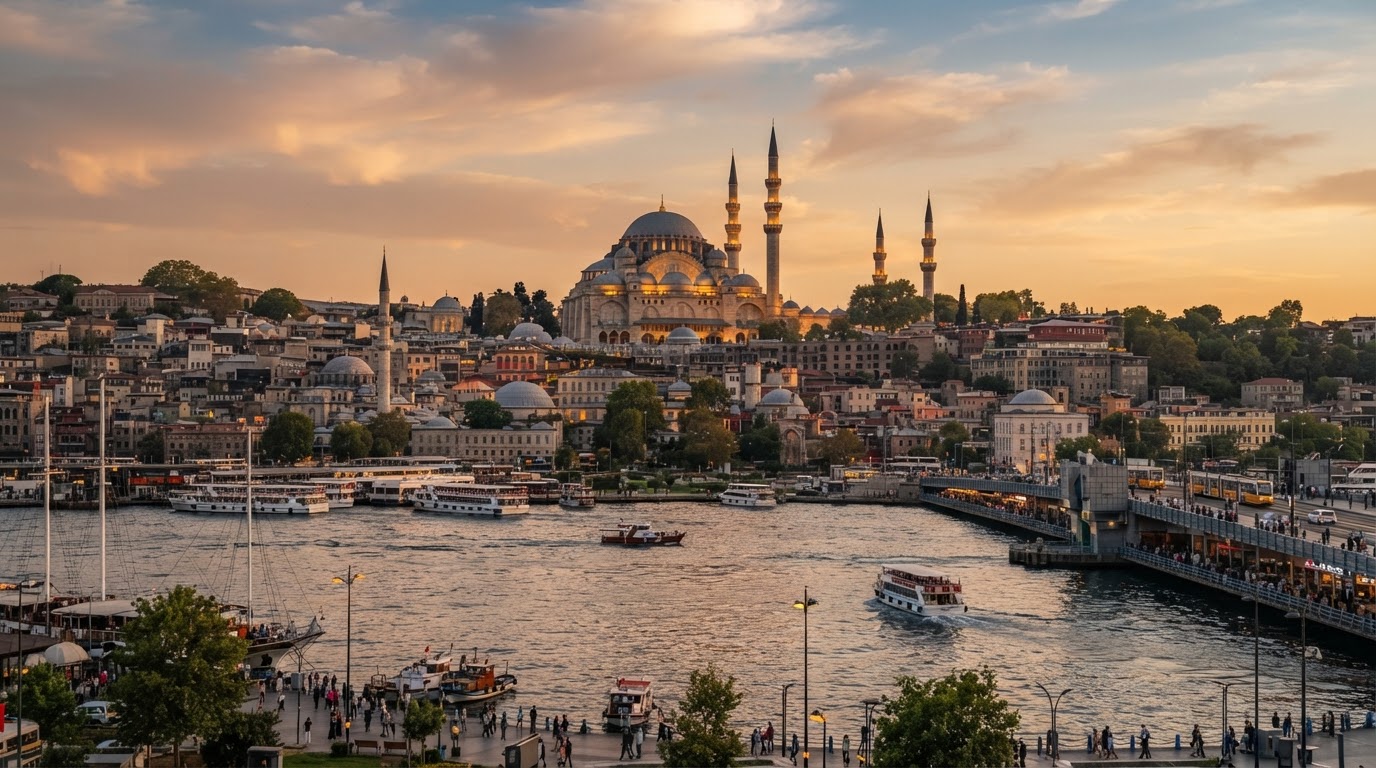
Mimar Sinan (c. 1490–1588) was the chief architect of the Ottoman Empire and is widely called the greatest of all Ottoman architects. He served as the empire’s chief architect from 1539 until his death in 1588, and his best-known works are the Şehzade Mosque and the Süleymaniye Mosque in Istanbul and the Selimiye Mosque in Edirne.
He is often described as the “Michelangelo of the Ottomans”, a comparison made by historians; UNESCO itself calls Sinan the most outstanding architect of the Ottoman Empire. This article follows what Britannica, UNESCO and Muslim Heritage confirm, and says plainly where sources disagree.
Quick facts
| Full name | Mimar Sinan, also called Mimar Koca Sinan (“Great Architect Sinan”); Sinan ibn Abd al-Mannan in some Arabic sources |
| Born | c. 1489–1491 (Britannica: c. 1490), near Kayseri, central Anatolia |
| Died | 17 July 1588, Istanbul |
| Fields | Architecture, military and civil engineering, urban planning |
| Most famous works | Şehzade Mosque (1548), Süleymaniye Mosque (1550–57), Selimiye Mosque, Edirne (1569–75) |
| Known for | Perfecting the classical Ottoman domed mosque and the külliye (mosque complex) |
Who was Mimar Sinan and where did he come from?
Sources agree on the outline but not every detail. Britannica says he was the son of Greek or Armenian Christian parents and followed his father’s trade as a stone mason and carpenter. Muslim Heritage gives his birth year as 1489, while Britannica gives c. 1490 and another Britannica feature gives 1491, so “c. 1490” is the safest date. Muslim Heritage also notes that the life story of Sinan is complex and uncertain in places, and that scholars rely on his friend Sai Mustafa Çelebi’s biographical texts.
In 1512 he was drafted into the Janissary corps, and he converted to Islam, beginning a lifelong service to the Ottoman royal house and to Sultan Süleyman I (reigned 1520–66) in particular. He entered through the devshirme system, in which Christian boys and young men from the empire’s territories were recruited and trained for state service.
How did a soldier become an architect?
Sinan trained first as a military engineer. Britannica says he became a construction officer in the Ottoman army and eventually rose to chief of the artillery. According to Muslim Heritage, he took part in campaigns including Belgrade (1521), Vienna (1529) and Baghdad (1535).
Two engineering feats from this period are recorded. In the 1534 Persian war he devised ferries to carry the army across Lake Van, and in Wallachia he built a bridge across the Danube. Britannica adds that he first showed his talent in the 1530s by designing and building military bridges and fortifications. These years gave him practical experience with bridges, defences and castles before he ever designed a mosque.
When did he become chief architect, and what did he build?
Most sources give 1539 as the year he became chief architect; Archnet gives 1538, after the death of his predecessor Ali Acemi. Britannica notes he was about 47 when Süleyman appointed him. He kept the post for the rest of his life.
Counts of his output differ. Britannica lists 79 mosques, 34 palaces, 33 public baths, 19 tombs, 55 schools, 16 poorhouses, 7 madrasas and 12 caravanserais, plus granaries, fountains, aqueducts and hospitals. Archnet says he oversaw at least 476 buildings, 196 of which survived into the twenty-first century. Muslim Heritage notes that his friend’s list had 343 buildings, while three biographical texts together named 477. Treat any single total as an estimate.
What are Sinan’s three great mosques?
Şehzade Mosque, Istanbul (completed 1548)
Dedicated to the memory of Süleyman’s son and heir, who died at 22, this was his first large imperial mosque. Like many of his mosques, it has a square base carrying a large central dome flanked by four half domes. Sinan regarded it as the best work of his apprenticeship.
Süleymaniye Mosque, Istanbul (1550–57)
Britannica says many scholars consider it his finest work, and its central dome is pierced by 32 openings, giving a feeling of lightness and filling the interior with light. The same source describes the complex around it: four madrasas, a large hospital and medical school, a kitchen-refectory, baths, shops and stables.
Selimiye Mosque, Edirne (1569–75)
Britannica states that Sinan himself considered it his masterwork, with the great dome rising on eight massive piers. It has a dome roughly as large as Hagia Sophia’s, both about 31 metres across.
How did Sinan design for Muslim worship?
Britannica explains that Sinan took the Byzantine church of Hagia Sophia as a starting point and adapted his mosque designs to Islamic worship, which requires large open spaces for common prayer. This matters because Muslims pray in straight rows shoulder to shoulder. The Prophet ﷺ said, according to Sahih al-Bukhari 723, that straightening the rows is part of the completion of prayer, so an uninterrupted hall with few obstructing columns serves the practice well.
Britannica adds that he pioneered smaller domes, half domes and buttresses to lead the eye up to the central dome, and used tall slender minarets to frame the building. Muslim Heritage says he often designed mosques as part of a complex with schools, baths, guesthouses and hospitals, so the Masjid served education, health care and charity as well as prayer. The Quran describes who should care for such houses: Surah At-Tawbah (9:18) says that only those who believe in Allah and the Last Day, establish prayer and give zakat should maintain Allah’s mosques.
Legacy
- UNESCO recognition: UNESCO calls the Selimiye Mosque Complex a masterpiece of the human creative genius of Sinan. It was added to the World Heritage List in 2011. The Süleymaniye Mosque and its conservation area form one of the four components of the “Historic Areas of Istanbul” site, inscribed in 1985.
- His pupils: He trained assistants who became distinguished, including Sedefkar Mehmed Agha, architect of the Sultan Ahmed (Blue) Mosque.
- Later mosques: The symmetrical central-dome-and-four-semi-domes design of the Şehzade Mosque was repeated in classical Ottoman mosques built after Sinan.
- Renaissance comparison: Muslim Heritage says Sinan was a contemporary of Michelangelo and Palladio, and it suggests possible influence on Italian designs. Historians treat this link as a possibility rather than a settled fact.
What this means for you
Sinan’s story shows a Muslim craftsman rising through hard practical work to build mosques that are still in use more than 400 years later. The Prophet ﷺ said in Sahih Muslim 533 that whoever builds a mosque seeking Allah’s pleasure will have a house built for him in Paradise. Sinan’s own intentions are known only to Allah, but the hadith reminds us why building and caring for Masjids remains an act of worship.
Frequently asked questions
Was Mimar Sinan a Muslim scientist?
He is better described as an architect and engineer than a scientist. He applied geometry and engineering to build domes, bridges and aqueducts, and he served the Ottoman state as a Muslim after converting to Islam in 1512.
Which is Sinan’s most famous mosque?
The Süleymaniye in Istanbul is the best known and is considered by many scholars his finest work, but Sinan himself named the Selimiye in Edirne as his masterwork.
How long was Sinan chief architect?
About fifty years, from 1538 or 1539 until his death on 17 July 1588, serving under Süleyman the Magnificent, Selim II and Murad III.
Read more: Browse the full series at Great Muslim Scientists, and see Piri Reis: The Ottoman Admiral Whose 1513 World Map Showed the Americas and Taqi al-Din (al-Rasid): The Ottoman Astronomer Who Built the Istanbul Observatory.
Sources: Encyclopaedia Britannica, “Sinan”; UNESCO World Heritage Centre, Selimiye Mosque and its Social Complex; Muslim Heritage, “Sinan: A Great Ottoman Architect and Urban Designer”.
Follow Ruhani Dua on Facebook for short videos and reminders. / रूहानी दुआ को Facebook पर Follow करें।
Discover more from ImranJalna
Subscribe to get the latest posts sent to your email.






Leave a Reply