

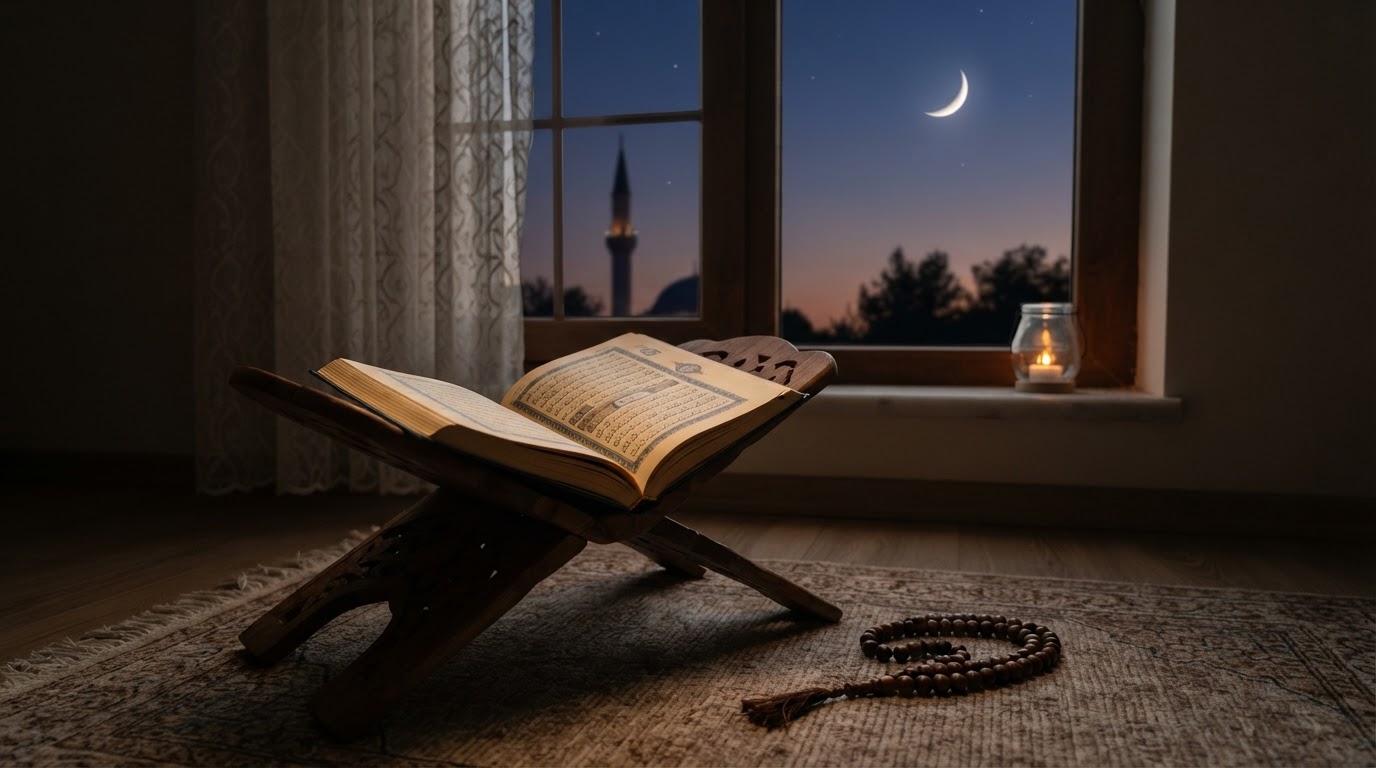
Rajab 1448 AH is expected to begin on Thursday, 10 December 2026 (Umm al-Qura calendar, Makkah), with local moon sighting able to move it to 11 or 12 December in some countries. It is expected to run 30 days and end on Friday, 8 January 2027, with Sha’ban starting the next day. (Information as of 24 November 2026.)
| Quick facts | Details |
|---|---|
| What | Rajab, the 7th month of the Hijri calendar and one of four sacred months |
| 1 Rajab 1448 (expected) | Thursday, 10 December 2026 (Umm al-Qura) |
| Last day (expected) | Friday, 8 January 2027 |
| Where dates differ | Pakistan, India, UK and others that follow local sighting may begin on 11 or 12 December |
| Who decides | Local moon-sighting committees or national religious authorities; Saudi Arabia publishes the Umm al-Qura calendar |
| Next month | Sha’ban, expected from 9 January 2027 |
| Ramzan 2027 | IslamicFinder lists 8 February 2027 as the expected start |
When does Rajab 1448 start and end?
Calendar sites that follow Umm al-Qura, such as this Rajab 1448 table, put 1 Rajab on Thursday, 10 December 2026. The Islamic day begins at sunset, so the month starts the evening before, on Wednesday 9 December. The month is expected to run 30 days, finishing on Friday 8 January 2027.
Many communities do not rely on calculation alone. Human Appeal notes Rajab 1448 may start on Thursday 10 December, or Saturday 12 December in the UK, depending on sighting of the moon. Rasool ﷺ taught the practice of sighting the crescent for months such as Ramzan (Sahih al-Bukhari 1909), and scholars differ on whether astronomical calculation may replace sighting. Please follow the announcement of your local Masjid or moon-sighting committee, and treat every date in this guide as “expected” until it is announced.
| Date | Expected Gregorian date (Umm al-Qura) | Depends on |
|---|---|---|
| 29 Jumada al-Akhirah 1448 (crescent-sighting evening) | Wednesday, 9 December 2026 | Sighting or Makkah calendar |
| 1 Rajab 1448 | Thursday, 10 December 2026 | Local sighting may shift by 1–2 days |
| 15 Rajab 1448 | Thursday, 24 December 2026 | Start date of your region |
| 27 Rajab 1448 | Tuesday, 5 January 2027 | Start date of your region |
| 30 Rajab 1448 (last day) | Friday, 8 January 2027 | Month length (29 or 30 days) |
| 1 Sha’ban 1448 | Saturday, 9 January 2027 | Sighting on 29 Rajab |
| 1 Ramzan 1448 | About 8 February 2027 | Moon sighting; not yet announced |
| 1 Rajab 1449 (next year) | Expected 29 November 2027 | Umm al-Qura estimate; see the table here |
The 15 and 27 Rajab rows are my own counting from the 10 December start (1 Rajab + 14 and + 26 days), shown only so you can plan around the date. The lunar year is shorter than the Gregorian one, so Rajab starts around 10–11 days earlier each year, which is why the 1449 estimate falls in late November 2027.
Why is Rajab one of the four sacred months?
Allah states in the Quran: “Indeed, the number of months with Allah is twelve… of these, four are sacred” (Quran 9:36), and the same verse instructs believers not to wrong themselves in these months. The Quran also refers to fighting in the sacred month as a grave matter (Quran 2:217), showing that the restriction on conflict and wrongdoing carries extra weight in these months.
The Quran does not list the four by name. Rasool ﷺ did so in his farewell sermon: three in succession, Dhul Qadah, Dhul Hijjah and Muharram, and Rajab of Mudar, which comes between Jumada and Shaban (Sahih al-Bukhari 3197; Sahih Muslim 1679). Rajab is the only one of the four that stands alone, which is why it is called “al-Fard” (the single one) in some classical sources.
Which practices in Rajab are authentic?
Scholars agree that Rajab shares the general virtue of the sacred months, so avoiding sin, repenting and increasing good deeds are encouraged. The following acts are established by sound texts, but they are not exclusive to Rajab:
- Avoid wronging yourself and others: this is the direct instruction of Quran 9:36.
- Voluntary fasting: Rasool ﷺ called fasting in Muharram the best fasting after Ramzan (Sahih Muslim 1163). Monday and Thursday fasts and the three white days (13, 14, 15 of each lunar month) are established practices that you can keep in Rajab as in any month.
- Night prayer and Quran recitation: Rasool ﷺ ranked night prayer as the best prayer after the obligatory ones (Sahih Muslim 1163), with no specific night of Rajab required.
- Charity, repentance and dua: good deeds in any month are rewarded, and the sacred months add to the weight of sin and the value of restraint.
- Preparing for Ramzan: Rasool ﷺ fasted most in Sha’ban (Sahih al-Bukhari 1969; Sahih Muslim 1156), so Rajab is a practical time to build the habit of fasting and Quran reading.
Which common Rajab claims lack sound hadith?
The main reference is Ibn Hajar al-Asqalani’s book Tabyin al-Ajab, which collected the reports about Rajab. He concluded the reports on Rajab’s virtues fall into two groups: weak and fabricated. He wrote that no sahih hadith counts as proof for Rajab’s virtue, fasting in it, or praying on any particular night.
- Fasting the whole month or fixed days for a special reward: Ibn Hajar found no sahih or hasan hadith promising a special reward for fasting Rajab. Some narrations on this topic are also graded weak: the Abu Dawud report (2428) about fasting some days of the sacred months, is classed weak by Al-Albani.
- Salat al-Raghaib (a special prayer on the first Thursday night or Friday night of Rajab): Ibn Rajab al-Hanbali called the hadiths about it lies and falsehoods.
- 27 Rajab as a night of Isra and Miraj, with special fasting or vigil: the Quran mentions the night journey (Quran 17:1), but the date is not fixed in sound reports. Ibn Hajar concluded there is no valid proof to assign worship to 27 Rajab.
- Umrah in Rajab as uniquely rewarded: the well-known report that Rasool ﷺ performed an Umrah in Rajab was denied by Ibn Umar and Aisha (Sahih al-Bukhari 1775; Sahih Muslim 1255), so it cannot be used as a basis for a special Rajab ritual. Umrah itself remains a recommended act in any month.
Where scholars differ: Some scholars allow acting on weak reports for virtuous deeds and therefore recommend fasting in Rajab. Ibn Taymiyyah said the Rajab-specific reports are mostly fabricated, not merely weak, so many scholars advise against singling Rajab out. On fasting Rajab while believing it is more virtuous than other months, Ibn Hajar’s view was that it is not permissible. The shared ground is that fasting on ordinary voluntary days in Rajab is fine, and assigning a fixed ritual or reward to Rajab alone is where the disagreement lies. Shia communities observe separate Rajab amaal drawn from their own sources; this guide covers the Sunni hadith-grading debate only.
What this means for you
Use Rajab as a runway to Ramzan, which is about two months away: set a Quran reading goal, fast Mondays and Thursdays, give regular charity, and settle any disputes or debts. Check your local Masjid for the moon announcement around 9–11 December 2026, and skip any message that promises a guaranteed reward for a Rajab-only prayer or fast. For Hijri dates and prayer times in your city, IslamicFinder’s Islamic calendar is a handy reference.
FAQ
What is the rajab 2026 start date?
Expected Thursday, 10 December 2026 by the Umm al-Qura calendar. Some regions may begin on 11 or 12 December after local moon sighting.
Is fasting in Rajab compulsory?
No. Only Ramzan fasting is obligatory. Voluntary fasting in Rajab is allowed, but there is no sound hadith giving Rajab fasting a special reward.
Is Isra and Miraj on 27 Rajab?
It is widely marked on that date, but classical sources differ on the exact date and no sound hadith fixes it. IslamicFinder lists Isra and Miraj 2027 as 5 January 2027, which reflects the popular date in its calendar.
When does Rajab start in 2027?
Rajab 1449 is expected around 29 November 2027 and runs to about 28 December 2027, per Umm al-Qura estimates. Confirm it locally nearer the time.
Follow Ruhani Dua on Facebook for short videos and reminders. / रूहानी दुआ को Facebook पर Follow करें।
Discover more from ImranJalna
Subscribe to get the latest posts sent to your email.


Leave a Reply