

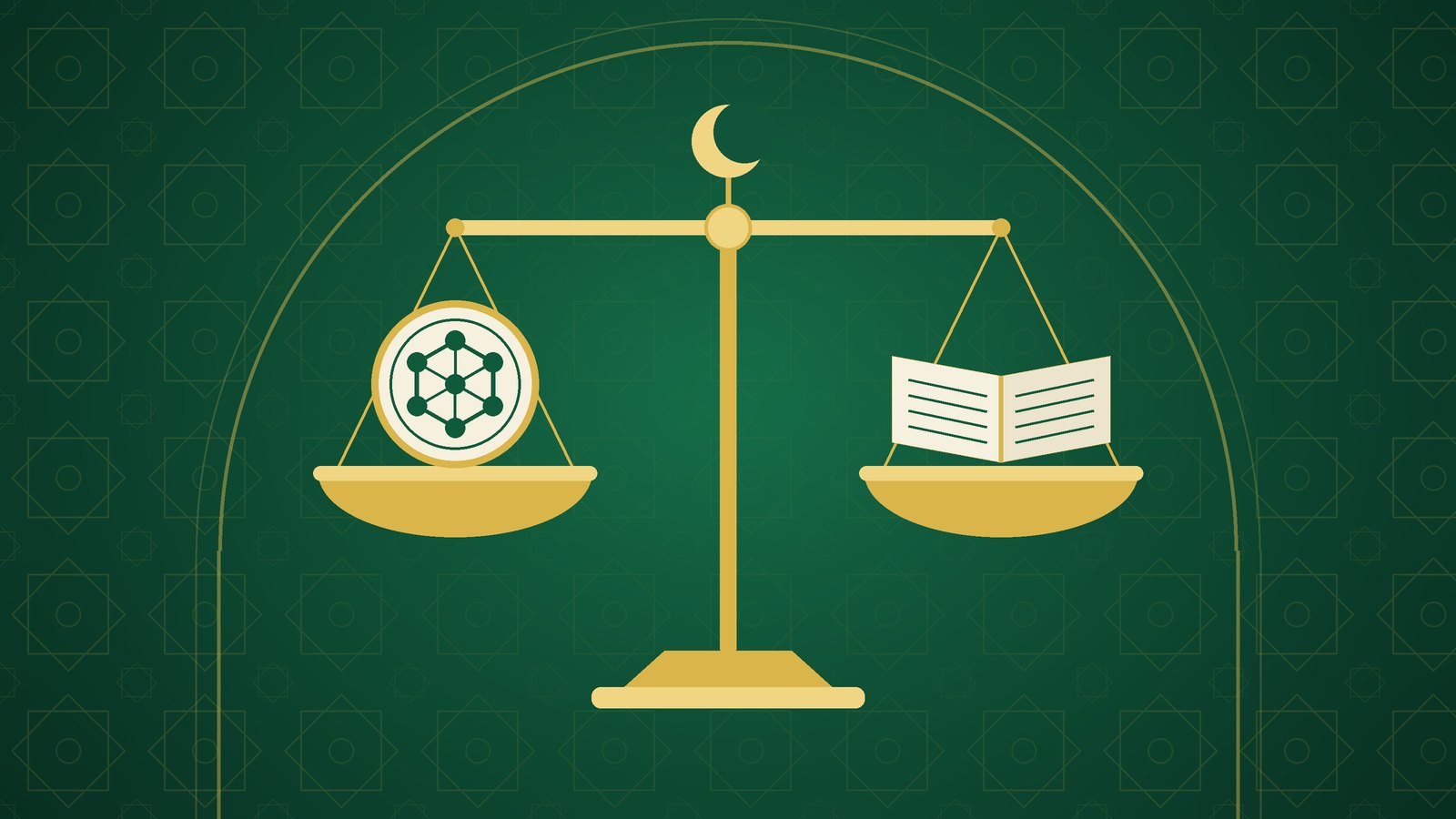
Is crypto halal? It is one of the most searched questions in Islamic finance, and the honest answer is that qualified scholars do not agree. Some of the most respected fatwa (religious ruling) bodies in the world say cryptocurrency is Haram (forbidden). Others say it is Halal (permissible) in principle, with conditions. This guide sets out every major view fairly, explains the Islamic concepts behind them, compares Bitcoin, stablecoins, staking, trading and futures, covers Zakat (obligatory charity) on crypto, and explains the tax and legal position in India.
Last updated: 22 November 2026. This article is general education. It is not a fatwa and not financial advice.
Key takeaways
- Scholars differ. Darul Uloom Deoband, Mufti Taqi Usmani’s Darul Uloom Karachi, Egypt’s Dar al-Ifta and Turkey’s Diyanet have ruled against cryptocurrency. Malaysia’s Securities Commission Shariah Advisory Council allows trading in principle.
- The core question is Mal (property). If crypto counts as real wealth in Shariah, buying and selling it can be valid. If it does not, the trade itself is void.
- Some things fail on almost every view: futures, margin and leverage, fixed-return “earn” and lending products, and meme-coin gambling.
- AAOIFI has not published a dedicated cryptocurrency standard, so no single global ruling exists.
- Zakat: scholars who accept crypto as wealth say 2.5% is due on its market value on your Zakat date.
- India: crypto is legal to hold and trade but is not legal tender. Gains are taxed at 30% plus cess, with 1% TDS and no loss set-off.
Is crypto halal? The short answer
There are three scholarly positions, and each is held by serious people.
- Impermissible: cryptocurrency is not recognised wealth, and Muslims should not buy, sell or pay with it.
- Permissible in principle: a coin that people value, own and exchange is property, so buying and selling it on the spot is allowed, as long as the usual rules of Islamic trade are kept.
- Conditional: the ruling depends on the specific coin and the specific activity.
A study of 32 public fatwas issued between 2014 and 2024, cited by Dawn, found that 17 prohibited crypto outright, 10 permitted it with conditions and 5 were cautious or neutral. Prohibition is the larger camp, but there is no consensus.
What cryptocurrency is, in plain words
A cryptocurrency is a digital unit recorded on a blockchain, which is a shared ledger kept by thousands of computers instead of one bank. Bitcoin, launched in 2009, was the first. Nobody issues it and no asset backs it. Thousands of other coins and tokens have followed. Some run networks (Ether), some are tied to the US dollar (stablecoins such as USDT and USDC), and many exist only for speculation.
The Islamic concepts behind the debate
The Quran sets the base rule for all trade: “Allah has permitted trade and forbidden Riba” (Surah Al-Baqarah 2:275). Trade is lawful by default. It becomes unlawful when one of the prohibited elements enters it. Five concepts decide the crypto question.
Mal (property or wealth)
A valid sale needs something that Shariah recognises as Mal on both sides. Classical Hanafi jurists describe Mal as something people naturally desire and can store for a time of need. Many later scholars add that Urf (custom) can make intangible things property once people treat them as valuable. Those who permit crypto say it meets this test. Those who prohibit it say a ledger entry with nothing behind it does not.
Thaman (money, a medium of exchange)
Gold and silver are natural money in Islamic law. Paper currency is accepted as customary money because states issue it and people use it everywhere. Several fatwa bodies say a private coin with no issuer and no state backing cannot reach that status.
Riba (interest)
Riba is any guaranteed increase on a loan. Simply buying a coin does not involve Riba. But much of the crypto industry does: lending platforms, “earn” accounts that pay a fixed percentage, and margin trading with borrowed funds. Our guide to Riba in modern banking explains the principle in detail.
Gharar (excessive uncertainty)
The Prophet Muhammad ﷺ forbade the Gharar sale (Sahih Muslim 1513), meaning a sale where the object, price or delivery is seriously unclear. Critics say crypto crosses that line: unknown issuers, no underlying asset, extreme price swings and frequent fraud.
Maysir (gambling)
The Quran calls Maysir an abomination to be avoided (Surah Al-Ma’idah 5:90). It means gaining wealth by chance at another person’s loss. Buying an asset you have studied is not gambling. Betting on short-term price moves, especially with leverage, looks very much like it.
What the scholars and fatwa bodies have said
View 1: Cryptocurrency is not permissible
Darul Uloom Deoband (India). Deoband’s Darul Ifta addressed Bitcoin in October 2017 (Fatwa Nos. 155068 and 155275). As reproduced by ShariahBoard on IslamQA.org, the ruling treats Bitcoin and other digital currencies as imaginary currencies that lack the features of real money, with no saleable property behind them, and says dealing in them resembles interest and gambling and is not allowed. Darul Uloom Waqf Deoband, a separate institution, likewise advised Muslims to avoid buying and selling a currency that no government issues or controls.
Mufti Muhammad Taqi Usmani and Darul Uloom Karachi (Pakistan). The most discussed ruling of 2026 came from Darul Ifta, Jamia Darul Uloom Karachi. Dated 10 June 2026 and signed by Mufti Taqi Usmani with five other scholars, it answered a man who had bought books with cryptocurrency. According to Dawn’s report, the fatwa held that, on the research and expert opinion gathered so far, cryptocurrency does not qualify as Mal, so the purchase was invalid and the books had to be returned. Press reports add that it covers tokens and stablecoins such as USDT. The fatwa speaks of research “so far”, and Dawn later reported that Darul Uloom Karachi is holding further scholarly sessions to refine its work, after Pakistan’s virtual assets regulator asked whether asset-backed tokens should be treated differently.
Dar al-Ifta al-Misriyya (Egypt). Grand Mufti Shawki Allam issued a fatwa at the end of December 2017 declaring trade in Bitcoin unlawful. The reasons given were that it is not an accepted medium of exchange, has no central bank cover, exposes people to fraud and gambling-like ruin, and can fund illicit activity. Harvard Law School’s Islamic Law Blog has a detailed study of this fatwa.
Diyanet (Turkey). In November 2017 the High Board of Religious Affairs said buying and selling virtual currencies such as Bitcoin and Ethereum was not appropriate “at this point”, because they are open to speculation, can be used for illegal activity and sit outside state audit and supervision, as Hürriyet Daily News reported.
View 2: Cryptocurrency is permissible in principle
Securities Commission Malaysia, Shariah Advisory Council. In July 2020 the Council resolved that digital assets are recognised as Mal from a Shariah perspective, and that investing and trading in digital currencies and tokens on registered digital asset exchanges is permissible in principle.
Shariyah Review Bureau (Bahrain). This Shariah advisory firm, licensed by the Central Bank of Bahrain, published research in April 2018 written by Mufti Faraz Adam. The paper reasons that payment coins like Bitcoin function as currency because their users treat them as a medium of exchange, and that utility, asset-backed and equity tokens can be traded when the underlying project passes Shariah screening. It describes itself as preliminary research, not a fatwa.
View 3: It depends on the coin and the use
Majelis Ulama Indonesia (MUI). In November 2021 Indonesia’s council of scholars ruled that using crypto as a currency is Haram because of Gharar, harm and conflict with national law. As a traded asset, it said crypto is not valid unless it meets the Shariah conditions of a commodity, including a clear benefit and underlying value.
AAOIFI. The Accounting and Auditing Organization for Islamic Financial Institutions, whose standards most Islamic banks follow, is often quoted online as having “ruled” on crypto. It has not. A March 2026 review in the Journal of Integrated Sciences notes that AAOIFI has discussed cryptocurrency but has not issued a formal standard, and we found no dedicated crypto standard in its published list at the time of writing. Readers can check the current list on the AAOIFI website.
The positions at a glance
| Body or scholar | Year | Position |
|---|---|---|
| Darul Uloom Deoband (India) | 2017 | Not permissible |
| Dar al-Ifta (Egypt) | 2017 | Not permissible |
| Diyanet (Turkey) | 2017 | Not appropriate “at this point” |
| Securities Commission Malaysia SAC | 2020 | Permissible in principle |
| Shariyah Review Bureau (Bahrain) | 2018 | Research supports conditional permissibility |
| MUI (Indonesia) | 2021 | Haram as currency, conditional as asset |
| Darul Uloom Karachi (Mufti Taqi Usmani) | 2026 | Not permissible |
| AAOIFI | — | No dedicated standard |
Why sincere scholars reach different answers
They are answering slightly different questions. One scholar sees a number with no issuer and no asset and says it is not wealth. Another sees millions of people buying, holding and exchanging it and says custom has made it wealth. Neither side disputes that Riba, Gharar and Maysir are forbidden. They differ on whether those elements are built into crypto itself or only into how people misuse it. Several prohibiting rulings also date from 2017, when regulation was absent, and are worded as the position for now.
Bitcoin, stablecoins, staking, trading and futures compared
The table below shows how each activity is treated by scholars who permit crypto in principle. Scholars who hold that crypto is not Mal consider every row impermissible.
| Activity | Permissive-view verdict | Main Shariah concern |
|---|---|---|
| Buying and holding Bitcoin (spot) | Allowed with conditions | Is it Mal? Price volatility |
| Fiat-backed stablecoins (USDT, USDC) | Disputed; some allow for payments | Reserves held in interest-bearing assets |
| Utility and asset-backed tokens | Allowed if the project is Halal | What the project actually does |
| Proof-of-stake staking (validating a network) | Allowed by some | Is the reward for work, or a return on a loan? |
| “Earn” and lending products with fixed returns | Not allowed | Riba |
| Day trading | Discouraged or disallowed by many | Maysir, speculation |
| Futures, margin and leverage | Not allowed | Riba, Gharar, Maysir, selling what you do not own |
| Meme coins, pump-and-dump schemes | Not allowed | Maysir, deception |
Bitcoin
Bitcoin is the test case for the whole debate. It has no issuer, no cash flow and no underlying asset, which is exactly why Deoband, Dar al-Ifta and Darul Uloom Karachi reject it. It is also the most widely held coin, which is why permissive scholars say custom has made it property. If you follow the permissive view, the conditions are simple: buy on the spot with your own money, take real ownership, and do not treat it as a betting chip.
Stablecoins
A stablecoin tied one-to-one to the dollar removes the volatility objection, but that does not settle the matter. The Darul Uloom Karachi fatwa names stablecoins such as USDT and treats them the same as other crypto. Scholars on the permissive side raise a different concern: issuers usually keep their reserves in interest-bearing instruments such as treasury bills, and some stablecoins are created through interest-based lending protocols. Holding a fully backed stablecoin briefly to make a payment is the easiest use to defend. Lending it out to earn a “yield” is not.
Staking
The word “staking” covers two very different things. In true proof-of-stake validation, you lock coins to help secure a network and receive newly issued coins and fees for that service. Some scholars accept this as a reward for work, as long as the coin itself is acceptable. In the second type, an exchange takes your coins, lends them to others and pays you a fixed percentage. That is a loan with a guaranteed increase, which is Riba. Read how the product works first.
Spot trading and day trading
Buying a coin and selling it later at a profit is ordinary trade for those who accept crypto as Mal. The problem is intention and method. Rapid buying and selling on price charts, with no interest in the asset itself, moves from trade towards Maysir.
Futures, margin and leverage
This is the one area with near agreement. Futures and perpetual contracts are bets on a price without owning the coin. Margin and leverage add borrowed money, usually with interest or funding fees. Scholars who permit spot crypto still prohibit these products.
Zakat on crypto
Scholars who recognise crypto as wealth say Zakat is due on it. The UK’s National Zakat Foundation treats Bitcoin as zakatable because it is Mal with legal value. The method is the same as for cash and trade goods:
- Fix your Zakat date, one Hawl (lunar year) after your wealth first reached the Nisab (minimum threshold).
- On that date, note the market value of your coins in your local currency. Use the price that day, not what you paid.
- Add your cash, gold, silver and other zakatable assets, and deduct debts that are due now.
- If the total is above the Nisab, pay 2.5%.
The Shariyah Review Bureau’s 2023 paper on Zakat on crypto assets adds useful detail. Payment coins such as Bitcoin are zakatable at full value whatever your intention. Any token bought to resell is zakatable at full market value. Utility tokens held only to use a platform are not. If you count by the Gregorian year instead of the lunar year, the paper gives the rate as 2.577%.
Our free Zakat Calculator shows the live gold and silver Nisab in your currency. Enter the market value of your crypto along with your cash and savings. For shares and funds, see how to calculate Zakat on stocks and investments.
India: is crypto legal, and how is it taxed in 2026?
Several fatwas give weight to the law of the land. This section is a summary, not tax advice.
Legal status
- Not banned, not legal tender. No law prohibits holding or trading crypto in India. It is not recognised as currency, and you cannot insist that anyone accept it as payment.
- Supreme Court, 2020. On 4 March 2020, in Internet and Mobile Association of India v. Reserve Bank of India, the Supreme Court set aside the RBI’s April 2018 circular that had stopped banks from serving crypto businesses.
- Anti-money-laundering rules. Since a notification of 7 March 2023, crypto service providers fall under the Prevention of Money Laundering Act and must register with the Financial Intelligence Unit-India, including offshore platforms serving Indian users.
- No dedicated crypto law yet. India taxes crypto but has no licensing framework.
Tax rules
India taxes crypto as a Virtual Digital Asset (VDA). The rules were introduced by the Finance Act 2022 and continue under the Income-tax Act, 2025, which took effect on 1 April 2026 and renumbered the sections.
| Rule | What it means | Section (old Act / 2025 Act) |
|---|---|---|
| 30% flat tax | On income from transferring any VDA, plus 4% cess and any surcharge. Only the purchase cost is deductible. | 115BBH / 194 |
| No loss set-off | A loss on one coin cannot reduce a gain on another, or any other income, and cannot be carried forward. | 115BBH / 194 |
| 1% TDS | Deducted on the sale value once yearly transfers cross Rs 50,000 for specified individuals and HUFs, or Rs 10,000 for others. | 194S / 393 |
| Reporting | VDA income is declared in Schedule VDA of the return. Exchanges must report user transactions. | 285BAA / 509 |
Two practical points follow. Swapping one coin for another, or paying for goods with crypto, counts as a transfer and is taxable. And TDS is only an advance deduction; the 30% tax is worked out separately when you file. Check the current rules on the Income Tax Department website or with a chartered accountant before you file.
With a 30% tax, no loss set-off and 1% TDS on each sale, frequent trading is costly even before the Shariah concerns. For regulated alternatives, read how Halal ETFs work in India.
What should a Muslim do? A practical guide
The Prophet Muhammad ﷺ taught that the Halal is clear and the Haram is clear, and between them are doubtful matters; whoever avoids the doubtful has protected his religion and honour (Sahih al-Bukhari 52, Sahih Muslim 1599). Crypto sits in that doubtful space for many people. These steps follow from that.
1. Choose your scholar, not your preferred answer
Ask a qualified scholar you already trust and follow in other matters, and accept the answer. If you follow the Deobandi scholars in your worship, their position on crypto is clear.
2. If in doubt, stay out
Nobody is obliged to own crypto. There are investments on which scholars broadly agree, such as screened shares, Shariah-compliant funds, Sukuk and gold. Our free Halal Stock Screener checks whether a share passes Shariah screening. Our guides to Halal investing for beginners and how Halal stocks and ETFs are screened are good places to start, along with the full Halal Money hub.
3. If you follow the permissive view, keep these conditions
- Buy on the spot only, with your own money, and take real ownership.
- Never use futures, options, margin or leverage, and never borrow to buy.
- Avoid lending, “earn” and fixed-yield products.
- Check what the project does. Avoid tokens of gambling, interest-lending or other Haram businesses, and avoid meme coins.
- Use an exchange that is legal and registered in your country, and pay your taxes.
- Only use money you can afford to lose. Build an emergency fund first, and keep crypto a small part of your savings.
- Pay Zakat on it every year.
4. If you already hold crypto and now doubt it
Do not panic-sell on the strength of a headline. Stop adding new money, close any leveraged or interest-earning positions first, and then take your full situation to a scholar, including what to do with profits already made.
5. Watch for scams
“Halal coin” branding, guaranteed monthly returns, referral pyramids and WhatsApp trading groups are warning signs. A guaranteed return is Riba if it is real and fraud if it is not. The Quran forbids consuming one another’s wealth unjustly (Surah An-Nisa 4:29).
Frequently asked questions
Is crypto halal or haram in Islam?
Scholars differ. Darul Uloom Deoband, Darul Uloom Karachi under Mufti Taqi Usmani, Egypt’s Dar al-Ifta and Turkey’s Diyanet have ruled against it. Malaysia’s Securities Commission Shariah Advisory Council permits trading in principle. Follow a qualified scholar you trust, and avoid it if you remain in doubt.
Is Bitcoin halal?
Those who prohibit it say Bitcoin has no issuer, no underlying asset and is not recognised wealth. Those who permit it say wide acceptance has made it property, so buying and holding it on the spot is allowed with conditions. There is no agreed ruling.
What did Mufti Taqi Usmani say about cryptocurrency?
A fatwa from Darul Ifta, Jamia Darul Uloom Karachi, dated 10 June 2026 and signed by Mufti Taqi Usmani and five other scholars, held that on research so far cryptocurrency is not Mal (wealth) in Shariah, so buying goods with it is not valid. Reports say it covers tokens and stablecoins such as USDT.
What is Darul Uloom Deoband’s fatwa on Bitcoin?
Deoband’s Darul Ifta ruled in October 2017 that Bitcoin and other digital currencies are imaginary currencies without the features of real money, that dealing in them resembles interest and gambling, and that it is not permissible.
Are stablecoins like USDT halal?
It is disputed. The Darul Uloom Karachi fatwa treats stablecoins like other crypto. Scholars who permit crypto are more comfortable with fully backed stablecoins used for payment, but object to interest-bearing reserves and to lending stablecoins for a yield.
Is crypto staking halal?
It depends on the mechanism. Some scholars allow rewards earned for validating a proof-of-stake network. Products where a platform lends your coins and pays a fixed return are Riba and should be avoided.
Is crypto futures or leverage trading halal?
No. Even scholars who allow spot crypto prohibit futures, margin and leverage, because they combine interest, excessive uncertainty, gambling-like speculation and selling what you do not own.
Do I have to pay Zakat on crypto?
According to scholars who treat crypto as wealth, yes. If your total zakatable wealth is above the Nisab on your Zakat date, pay 2.5% of your crypto’s market value that day.
Has AAOIFI declared crypto halal?
No. AAOIFI has discussed digital assets but has not published a dedicated Shariah standard on cryptocurrency. Claims of an AAOIFI crypto ruling, in either direction, are not accurate.
Is crypto legal in India, and what tax applies?
Holding and trading crypto is legal in India, but it is not legal tender. Gains are taxed at a flat 30% plus cess, 1% TDS applies to sales above the threshold, and losses cannot be set off or carried forward.
Disclaimer: This article is for general education only. It is not a fatwa, and it is not financial, investment, legal or tax advice. Scholarly opinions reported here may be revised. Cryptocurrency is high-risk and you can lose all the money you put in. Tax rules change; confirm them with a qualified professional. For a ruling on your own situation, consult a qualified scholar you trust. See our full Disclaimer.
Follow Ruhani Dua on Facebook for short videos and reminders. / रूहानी दुआ को Facebook पर Follow करें।











Leave a Reply