
Al-Battani spent about 40 years observing the sky from Raqqa, refined the length of the year and used trigonometry in…
Read More

Islamic Knowledge, Quran, Hadith, Duas and Practical Guides for Everyday Muslim Life
Al-Battani spent about 40 years observing the sky from Raqqa, refined the length of the year and used trigonometry in…
Read MoreNasir al-Din al-Tusi (1201–1274) built the Maragheh observatory, gave the world the Tusi couple and made trigonometry a separate branch…
Read MoreOmar Khayyam is famous as a poet, but he was first a brilliant mathematician and astronomer. Learn how he classified…
Read MoreMeet Jabir ibn Hayyan (Geber), the early Muslim alchemist called the father of Arabic chemistry. Learn what his writings taught,…
Read More
Al-Kindi (c. 800–870) led Baghdad's translation of Greek science, wrote hundreds of treatises and gave the oldest known method for…
Read More
Al-Jazari (c. 1136–1206) built the Elephant Clock, water pumps with cranks and programmable musical automata, and described 50 machines in…
Read More
Ibn al-Nafis (c. 1213–1288) of Damascus and Cairo was the first known to describe how blood passes through the lungs,…
Read More
Al-Razi (c. 854/865–925) ran hospitals in Rayy and Baghdad, wrote the first detailed book on smallpox and measles, and dared…
Read More
Al-Zahrawi (c. 936–1013) of Cordoba drew more than 200 surgical instruments and wrote the surgery book Europe used for nearly…
Read More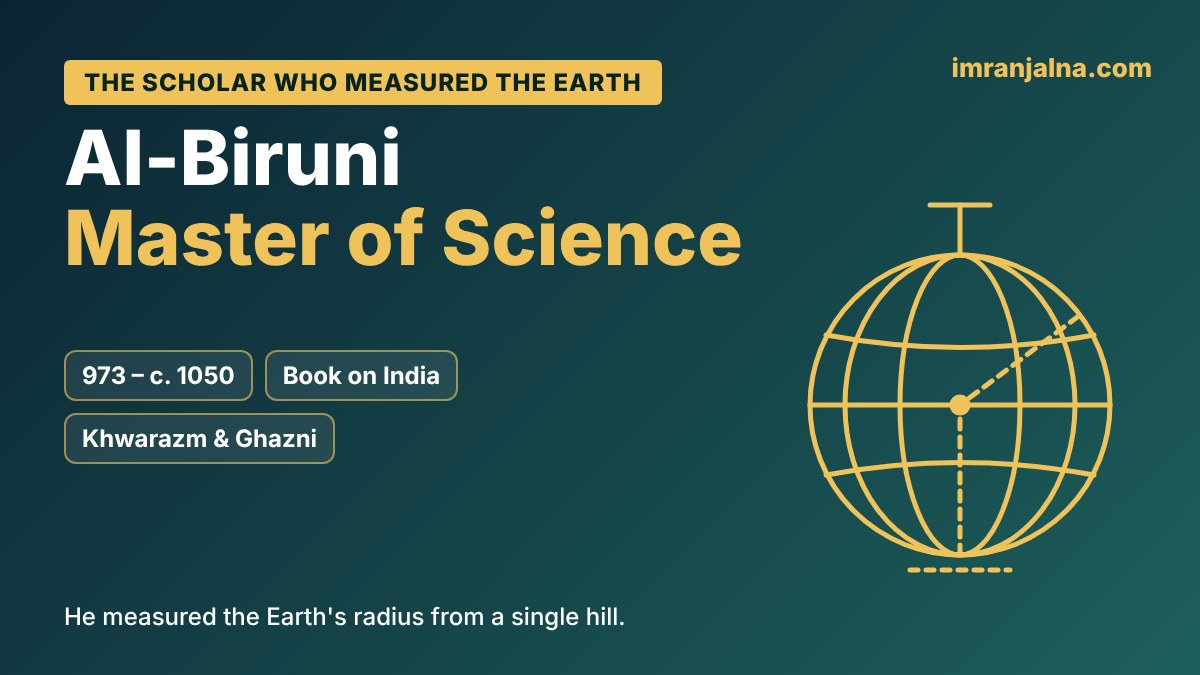
Al-Biruni (973–c. 1050) measured the Earth's size from a single hill, wrote a pioneering study of India and weighed gems…
Read More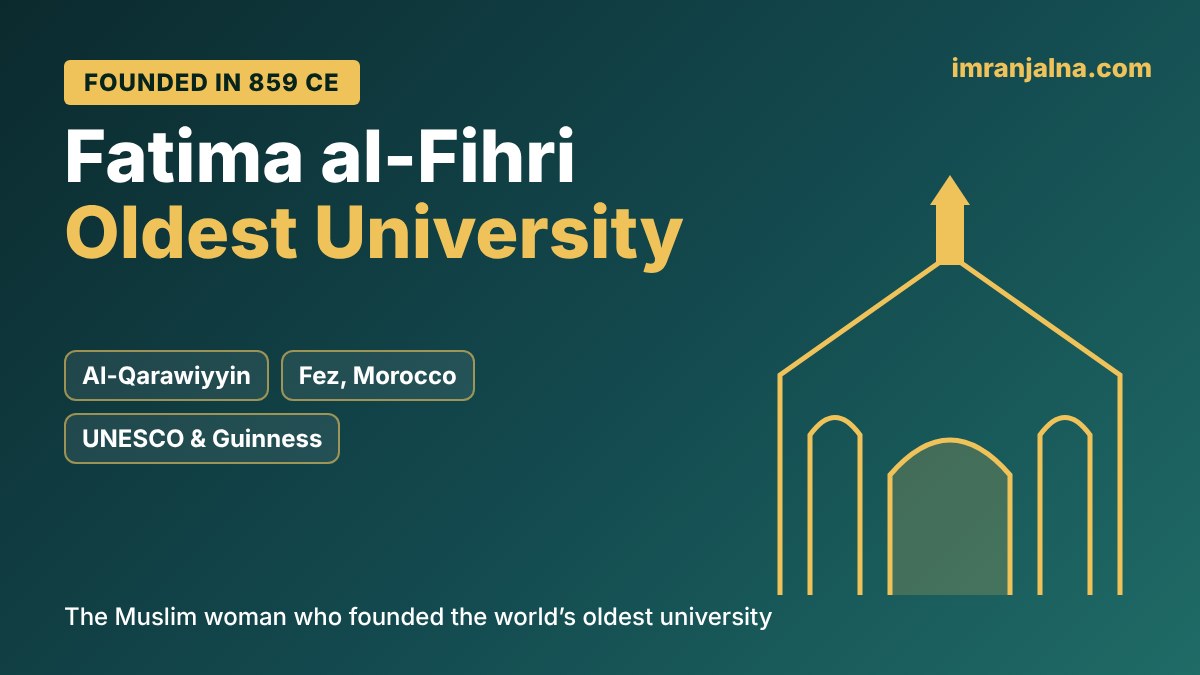
In 859 CE, Fatima al-Fihri used her inheritance to found al-Qarawiyyin in Fez, Morocco, recognised by UNESCO and Guinness as…
Read More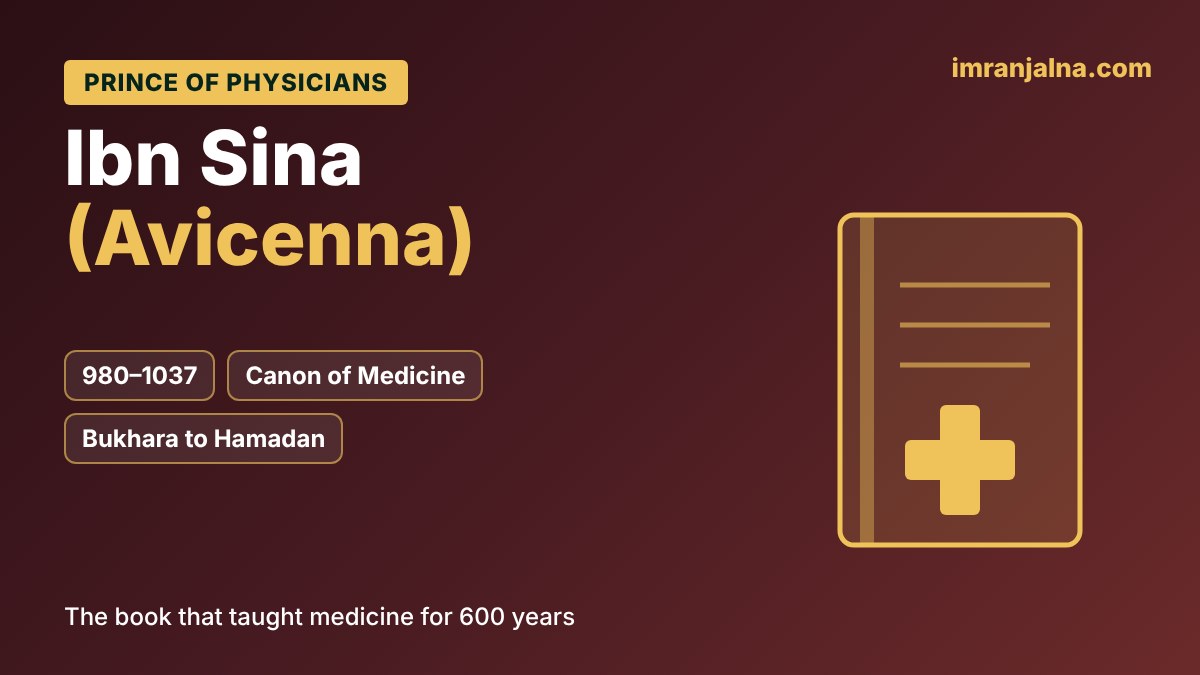
Ibn Sina (980–1037) wrote the Canon of Medicine, used as a textbook in European universities for about 600 years. His…
Read More