

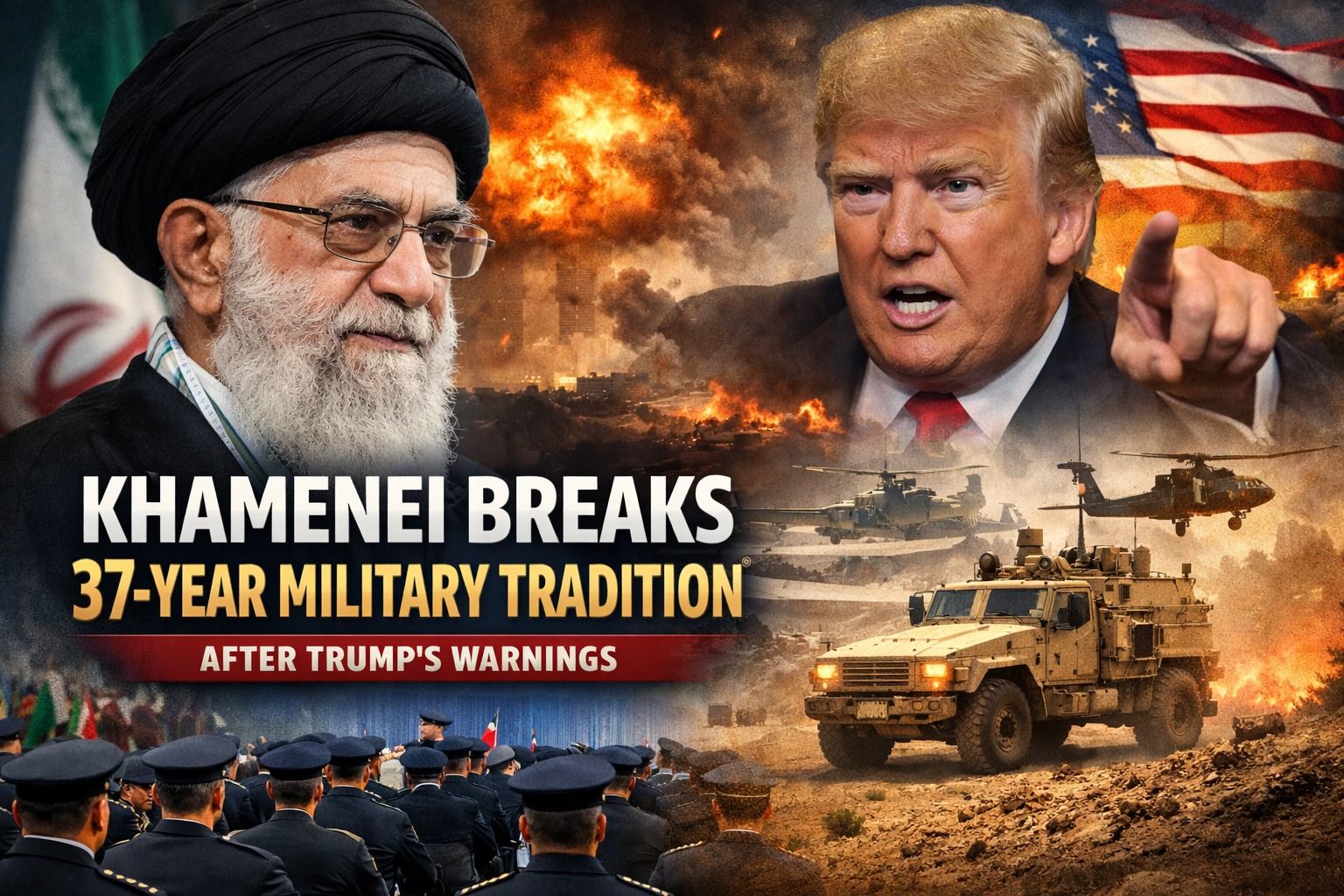
After Trump’s Warnings, Khamenei Breaks 37-Year Military Tradition: What It Means for Iran and the Region
Tehran/Washington:
Amid escalating tensions between Iran and the United States, Iran’s Supreme Leader Ayatollah Ali Khamenei has, for the first time in nearly four decades, skipped a key annual military event — a move that has drawn global attention and fueled speculation about Iran’s internal security concerns and regional strategy.
A Tradition Followed Since 1989
Every year since becoming Supreme Leader in 1989, Ayatollah Khamenei has personally attended a ceremonial meeting with senior commanders of Iran’s Air Force. The event commemorates the historic pledge made by air force officers to Ayatollah Ruhollah Khomeini in February 1979, a moment considered pivotal in the success of Iran’s Islamic Revolution.
However, during this year’s ceremony, held on February 8, Khamenei was notably absent — marking the first break in this 37-year-old tradition.
Event Led by Military Leadership
In place of the Supreme Leader, the gathering was addressed by Iran’s top military officials, including senior commanders of the armed forces. Iranian state media confirmed the event took place as scheduled but did not offer a detailed explanation for Khamenei’s absence.
The lack of an official reason has triggered widespread debate among analysts, especially given the sensitive geopolitical climate in West Asia.
Rising Iran–US Tensions
Khamenei’s absence comes at a time when relations between Tehran and Washington are under renewed strain. Former US President Donald Trump has recently issued strong warnings regarding Iran’s regional actions and military posture, while the US has also increased its military presence in parts of the Middle East.
Although there is no official confirmation that Khamenei skipped the event directly due to Trump’s statements, many international reports have linked the decision to heightened security concerns amid fears of potential escalation.
Security Over Symbolism?
Experts suggest that the Supreme Leader’s absence may reflect a calculated security decision rather than a political retreat. Large public military events involving Iran’s top leadership are considered high-risk during periods of elevated tension.
Some analysts also note that Iran has, in recent years, faced cyber threats, covert attacks, and targeted strikes against senior officials and facilities, making security protocols increasingly stringent.
Iran Sends a Subtle Message
By allowing the ceremony to proceed without him, Khamenei may be signaling that Iran’s military command structure remains strong and operational, even in his absence. At the same time, the break from tradition underscores the seriousness with which Tehran is viewing the current regional situation.
“This is not merely a skipped appearance; it is a reflection of how volatile the geopolitical environment has become,” said one regional affairs analyst.
No Official Explanation Yet
Iranian authorities have so far refrained from attributing the decision to any specific threat, health concern, or diplomatic calculation. As a result, global media outlets continue to interpret the move through the lens of Iran–US rivalry and broader Middle East instability.
Why This Matters
Khamenei’s absence from a long-standing military ritual is rare and symbolically significant. Whether driven by security concerns, strategic messaging, or temporary caution, the move highlights the fragile balance currently shaping relations between Iran and the United States — and raises questions about how close the region may be to another phase of confrontation.
Looking Ahead
With both Tehran and Washington maintaining hardline rhetoric, observers believe such symbolic shifts will continue to be closely watched. Any future deviation from established norms by Iran’s leadership may offer early clues about the direction of regional security and diplomacy in the months ahead.
As tensions persist, the world will be watching whether this broken tradition remains a one-time precaution — or the beginning of a new normal in Iran’s military and political signaling.

Discover more from Nayi Soch News-e-Hub
Subscribe to get the latest posts sent to your email.



















Leave a Reply