

A sukuk is an Islamic investment certificate that gives its holder an undivided share in a real asset, its use, or a project, rather than a claim to interest on a loan. It is often called an “Islamic bond”, but the return comes from the asset’s rent, sale profit or business profit, which is why it is designed to avoid riba. As of 17 November 2026, governments and companies use sukuk to fund everything from solar plants and railways to domestic energy assets.
| Quick facts | Detail (as of 17 November 2026) |
|---|---|
| What it is | Certificate of ownership in an asset, usufruct, service or project |
| Who sets the standard | AAOIFI, Shariah Standard No. 17 (Investment Sukuk) |
| Global size | Sukuk market exceeds US$1 trillion (LSEG) |
| ESG sukuk issued since 2017 | US$76.7 billion by Q3 2026 (LSEG) |
| Record year | 2025: US$24.9 billion, up 54% on 2024 |
| 2026 so far | US$11.4 billion by end of Q3, slower amid geopolitical tension |
| Live example | Energy Oman Series 2 Sukuk, retail window 18–30 November 2026 |
What is sukuk, and how is it different from a bond?
Sukuk is the plural of sakk, meaning certificate. AAOIFI, the Islamic accounting and standards body, defined sukuk in 2003 as certificates of equal value representing undivided shares in ownership of tangible assets, usufruct and services, or the assets of particular projects. A conventional bond is a loan: the holder is a creditor who is promised interest. Sukuk holders, by contrast, hold a direct ownership interest in the underlying assets.
That ownership link has consequences. AAOIFI stresses that sukuk are not claims on cash flows; they are investment certificates with claims on assets and a right to a share of the cash flow those assets generate. The holder is paid from the asset, whether rent, profit on a sale or business profit, and shares some of its risk.
How does an Islamic bond work step by step?
In a typical structure, a special purpose vehicle (SPV) holds the asset on behalf of investors. The SPV issues sukuk certificates representing undivided proportional ownership of the asset pool. Investors pay in, the money is used for the stated purpose, and periodic payments flow back to certificate holders from the asset’s earnings.
A current local example is Energy Development Oman’s Series 2 Sukuk. Its structure follows the Islamic principles of leasing (Ijarah) and agency (Wakala) and was approved by the Shari’a Supervisory Board of Muzn Islamic Banking, National Bank of Oman. It is a five-year sukuk with a fixed annual profit rate of 5 per cent, payable quarterly, and each certificate has a nominal value of OMR 1.000. Its cash flows are supported by Energy Oman’s energy assets in Oman.
Pricing details for individuals: the Category II subscription price is OMR 0.99785 per certificate, with a cut-off yield of 5.05 per cent. The retail subscription period runs from 18 to 30 November 2026, with a minimum of 100 certificates and an account and investor number with Muscat Clearing and Depository. The initial issue size is OMR 50 million, with a greenshoe option of an additional OMR 25 million. Listing on the Muscat Stock Exchange is scheduled on or around 10 December 2026. This is a market report, not investment advice; read the official offer notice before applying.
Why do scholars say sukuk can be halal, and where do they differ?
The starting point is the Quran: “Allah has permitted trade and has forbidden riba” (Surah al-Baqarah 2:275). The same passage warns those who persist in riba of war from Allah and His Rasool ﷺ (2:278–279), and Surah Aal Imran 3:130 tells believers not to consume riba “doubled and multiplied”. In Sahih Muslim 1598, the Rasool ﷺ cursed the one who consumes riba, the one who pays it, the one who records it and the two witnesses, saying they are all the same.
A second concern is excessive uncertainty (gharar); Sahih Muslim 1513 is the hadith commonly cited on the prohibition of sales involving gharar. Sukuk are structured to avoid interest, excessive uncertainty and prohibited activities.
Scholars do differ over whether particular sukuk truly meet these tests. AAOIFI issued its 2008 statement because many early sukuk failed the ownership tests. That guidance says a purchase undertaking should not be priced at the sukuk’s face value at maturity for mudaraba and musharaka structures. Structure, Shariah board approval and the nature of the underlying business all matter, so check the issuer’s fatwa and consult a trusted scholar.
How is Islamic finance funding green and infrastructure projects?
LSEG argues that Islamic financing must be tied to assets or real economic activity, so it suits tangible projects such as renewable energy, water infrastructure and green buildings. The scale is real: Islamic finance assets are estimated at US$6.5 trillion, projected to reach US$10.5 trillion by 2030.
Indonesia is the best-documented case. In March 2018 it issued the world’s first sovereign Green Sukuk in line with green bond principles. Proceeds have financed and refinanced renewable energy, energy efficiency, sustainable transport, waste management and climate resilience. From 2018 to 2023 the government issued a cumulative US$9.6 billion in green sukuk. Examples include more than 5 km of coastal breakwater structures and US$2.7 million for the Maluku Conservation Center. A caution from The Diplomat: green finance as a framework is very broad, perhaps overly so.
New categories are emerging. This year saw the world’s first two blue sukuk, both issued in Malaysia to fund water infrastructure. LSEG also notes that sovereigns in the GCC, Malaysia, Indonesia and Türkiye have published green or sustainability financing frameworks that provide for sukuk.
What are the limits of green sukuk?
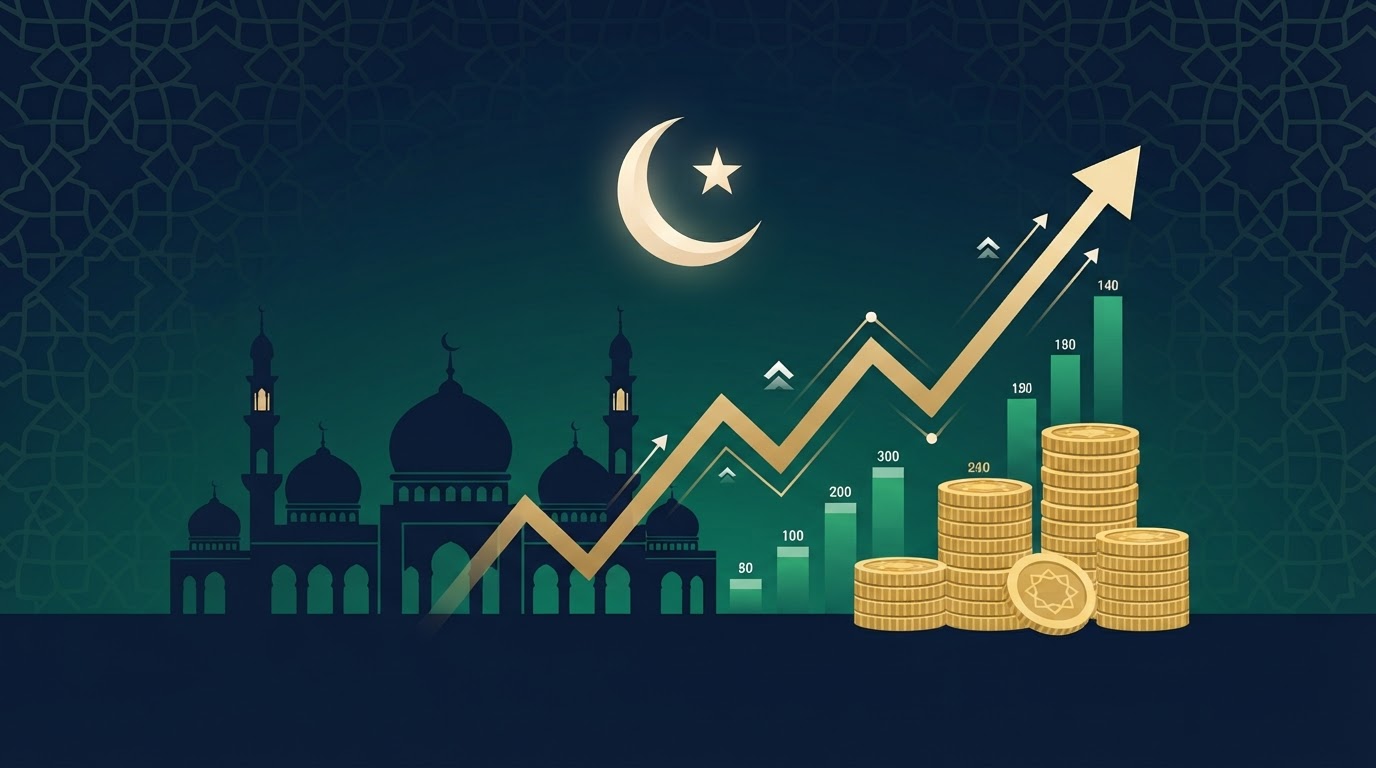
LSEG’s assessment is cautious: at a global level, Islamic finance alone will probably not close the climate finance gap, as ESG sukuk are still a small share of global ESG bond issuance. Momentum has also slowed: US$11.4 billion by the end of Q3 2026, as many corporate issuers postponed deals amid geopolitical tensions. The bigger constraint, it says, is capability: project readiness, external reviews and impact reporting on top of Shariah compliance.
What this means for you
- Ask what asset or project stands behind a sukuk, and which Shariah board approved it.
- Understand that returns are not guaranteed in every structure; ownership carries risk.
- Check the issuer’s business activity, not only the certificate’s structure.
- For a personal ruling, ask a qualified scholar; do not rely on a label alone.
FAQ
Is sukuk the same as a bond?
No. A bond is a debt paying interest; a sukuk represents ownership in an asset or project, and returns come from that asset.
Is every sukuk automatically halal?
No. Compliance depends on genuine asset ownership, structure and Shariah board approval, and scholars have criticised some structures.
What is a green sukuk?
It is a sukuk whose proceeds go to eligible environmental projects such as renewable energy or climate resilience. Indonesia issued the first sovereign one in 2018.
Can individuals buy sukuk?
Sometimes. Energy Oman’s Series 2 allows individuals to apply from 18 to 30 November 2026 via collecting banks, subject to its offer terms.
Sources: LSEG Insights, 16 November 2026; Oman Observer on Energy Oman Series 2.
Follow Ruhani Dua on Facebook for short videos and reminders. / रूहानी दुआ को Facebook पर Follow करें।
Discover more from ImranJalna
Subscribe to get the latest posts sent to your email.



Leave a Reply