

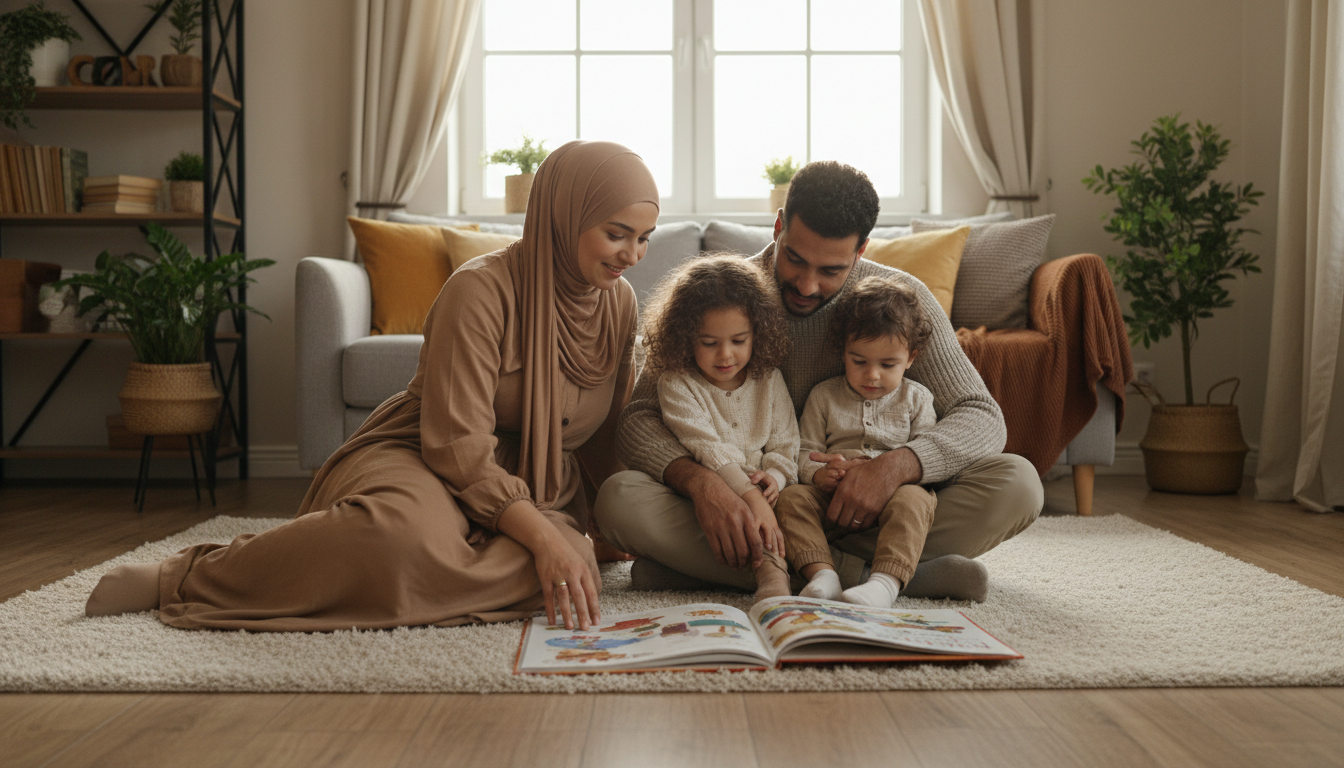
Children learn values not only from what adults tell them, but also from what they see every day. For Muslim families, teaching Islamic values can be part of ordinary routines: keeping promises, speaking kindly, showing gratitude, helping at home, and learning about worship in an age-appropriate way.
What the Quran and Sunnah say about raising children
- Protect your family: “O you who believe, protect yourselves and your families from a Fire…” (Surah At-Tahrim 66:6)
- Luqman’s advice to his son: do not associate partners with Allah, establish prayer, enjoin good, be patient, do not walk arrogantly, lower your voice. (Surah Luqman 31:13–19)
- Every parent is a shepherd: “Each of you is a shepherd and each of you is responsible for his flock.” (Sahih al-Bukhari 893, Sahih Muslim 1829)
- Teaching prayer gently: the Prophet ﷺ told parents to teach children prayer from the age of seven. (Sunan Abu Dawud 494)
- Mercy with children: the Prophet ﷺ kissed his grandson Hasan and said, “Whoever does not show mercy will not be shown mercy.” (Sahih al-Bukhari 5997)
- Fairness between children: “Fear Allah and be fair between your children.” (Sahih al-Bukhari 2587)
- A lasting reward: a righteous child who prays for the parent is one of three deeds that continue after death. (Sahih Muslim 1631)
Lead Through Your Own Example
Children notice how adults respond to mistakes, disagreement, money, and people who need help. Try to model honesty, patience, apology, and respect. If you make a mistake, acknowledge it and explain how you will try to do better. This teaches that good character includes taking responsibility.
Make Learning Age-Appropriate
Young children may learn best through stories, short conversations, and simple routines. Older children can explore questions, read translations with guidance, and discuss how values apply at school and online. Avoid overwhelming a child with long lectures or expecting adult-level understanding from a beginner.
Teach Worship with Encouragement
Introduce prayer, Quran learning, and duas with calm encouragement and reliable instruction. Children develop at different rates. Make space for questions, explain the purpose of a practice in simple terms, and consult knowledgeable teachers for detailed religious instruction. Avoid using fear or humiliation as the main teaching method.
Practise Kindness at Home
Invite children to help with manageable tasks, share fairly, care for relatives, and express gratitude. Family habits can include greeting one another respectfully, eating together when possible, and discussing one good thing that happened during the day. These small practices make values visible.
Talk About Online Behaviour
Discuss privacy, truthful sharing, respectful disagreement, and asking permission before posting photos. Explain that online messages can hurt real people and that viral religious quotes should be checked before being forwarded. Our guide to verifying Islamic quotes and hadith online can support family conversations about accuracy.
Respond to Mistakes with Guidance
When a child behaves badly, address the action without labelling the child as bad. Explain the harm, listen to their perspective, and agree on a suitable way to repair it. Consistent boundaries and warmth can work together; kindness does not mean ignoring harmful behaviour.
Build a Family Learning Routine
Choose one small weekly activity: read a short story about a prophet, discuss a verse with a trusted explanation, practise a dua with its meaning, or plan an act of service. Keep the activity brief and welcoming. Invite questions rather than pretending every answer is easy.
Families differ in language, culture, and circumstances. Use reliable Islamic sources, seek qualified guidance when needed, and remember that children benefit from both sound teaching and a home where they feel safe asking sincere questions.
Also read:
➤ Foster Care and Adoption in Islam: Compassion, Lineage and a Child’s Dignity
➤ Gaza One Year After Ceasefire: Winter, Hunger and Unsafe Shelter Keep Humanitarian Crisis Alive
➤ Mariam al-Asturlabi (al-Ijliyya): The Woman Astrolabe Maker of Aleppo
Follow Ruhani Dua on Facebook for short videos and reminders. / रूहानी दुआ को Facebook पर Follow करें।
Discover more from ImranJalna
Subscribe to get the latest posts sent to your email.











Leave a Reply