

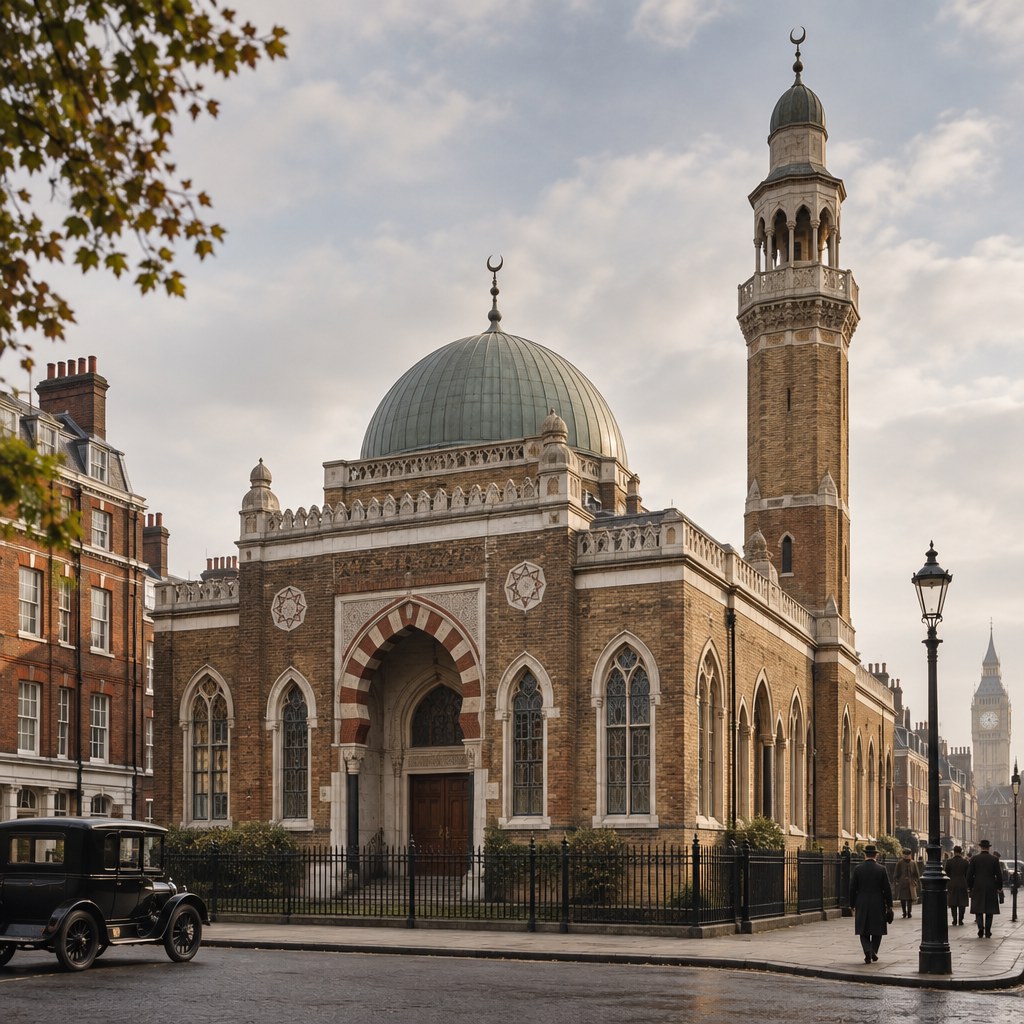
LONDON: The Fazl Mosque in southwest London has marked 100 years since its opening, turning attention to a landmark that has witnessed a century of Muslim community life in Britain.
The mosque opened in October 1926 and is recognised by Historic England as the first purpose-built mosque in London and only the second in Britain. The centenary has been accompanied by community events and renewed interest in the building’s history.
A mosque with a distinctive history
The Fazl Mosque was built in Southfields and became closely associated with the Ahmadiyya Muslim Community. Historic England lists the building at Grade II, citing both its architectural and historic importance.
Its design combines mosque traditions with restrained British architectural influences of the 1920s. A century later, the building remains in active religious use.
Funded through community sacrifice
Accounts published for the centenary say the mosque was funded through voluntary donations by members of the Ahmadiyya community in India, including significant contributions from women. The story has become an important part of the mosque’s centenary narrative.
That history reflects a wider pattern seen in Muslim communities around the world: places of worship are often built through many small contributions rather than a single source of funding.
Beyond a place of prayer
Coverage of the anniversary has highlighted the mosque’s community role across different periods of British history. It has been associated with charitable initiatives, interfaith engagement and local service.
The centenary programme also includes plans to distribute thousands of meals to homeless people, linking the anniversary with practical community support.
Muslim heritage in modern Britain
The anniversary comes at a time when Muslim identity, integration and the safety of mosques remain active subjects of public discussion in the UK. Historic Muslim institutions can offer a longer perspective: organised Muslim community life in Britain is not a recent development.
The Fazl Mosque’s listed status also places it within Britain’s protected architectural heritage. This means its significance is recognised not only by worshippers but within the country’s official heritage framework.
A century of change
Britain’s Muslim population today is far larger and more diverse than it was when the mosque opened. Mosques now serve communities with roots across South Asia, the Middle East, Africa, Europe and elsewhere, alongside British-born generations.
The Fazl Mosque’s centenary therefore functions as both a local anniversary and a reminder of the long history of Muslim institutions in Europe. Related coverage: UK mosque security funding and community safety.
Why the story matters internationally
For Muslim readers worldwide, the story shows how a religious institution can become part of a country’s civic and historical landscape while retaining its faith identity. The themes of worship, charity, neighbourly service and peaceful coexistence are likely to keep the centenary relevant beyond London.
From a small community to a national heritage story
When the Fazl Mosque opened in 1926, Britain’s Muslim population was only a fraction of its present size. A century later, Islam is part of everyday British life, with mosques, schools, charities and community organisations across the country. That transformation makes the centenary more than an architectural anniversary.
Historic England’s Grade II listing gives the building formal heritage recognition. Listed status reflects special architectural or historic interest and places obligations on how significant features are altered. The mosque therefore belongs simultaneously to a living worshipping community and to Britain’s protected built heritage.
Women and the founding story
Centenary material has drawn attention to donations that helped fund construction, including contributions from women in India. That connects the building in London with a wider transnational Muslim history. Communities separated by thousands of kilometres helped finance a permanent religious institution in Britain long before today’s instant digital fundraising tools existed.
Why the centenary matters for younger Muslims
For British Muslim teenagers and young adults, institutions that predate their parents or grandparents challenge the idea that Muslim life in Britain is entirely new. Historical awareness can also encourage preservation of archives, oral histories, photographs and community records before they disappear.
The anniversary is also an opportunity to examine how mosque roles have changed. Modern congregations often expect places of worship to provide youth activities, charity programmes, interfaith dialogue, educational classes and social support alongside prayer.
A broader European story
Across Europe, older mosques are increasingly becoming heritage sites while remaining active places of worship. Their preservation raises questions about funding, accessibility, conservation and how to tell Muslim history to the wider public. The Fazl Mosque centenary offers one example of how those conversations can take place without turning a living religious institution into merely a museum object.
What readers can take from the anniversary
The strongest lesson is continuity. Muslim institutions become durable when worship, education, service and good relations with neighbours are sustained across generations. Preserving the building matters, but preserving records and community memory matters too. Mosques marking major anniversaries can digitise archives, record interviews with older members and make verified historical material accessible to schools and researchers.
The centenary also gives local residents who are not Muslim an opportunity to learn about a building they may have passed for years without knowing its history. Open days, exhibitions and carefully documented heritage projects can make a mosque’s story part of the shared history of its neighbourhood.
Sources: Historic England; Fazl Mosque Centenary.
Discover more from ImranJalna
Subscribe to get the latest posts sent to your email.


Leave a Reply