

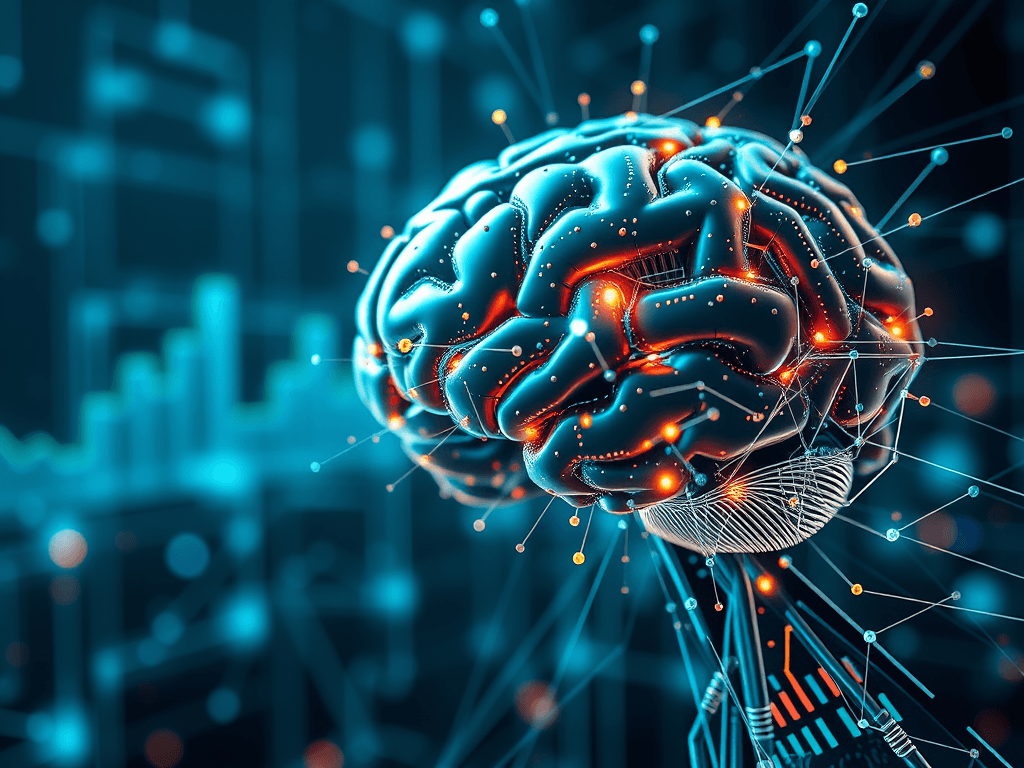
🤖 AI Surpasses Human Ability in Many Tasks, Says Google DeepMind’s Jeff Dean

Artificial Intelligence (AI) has made tremendous strides in recent years, and according to Jeff Dean, Chief Scientist at Google DeepMind, it has already surpassed the average human in many cognitive tasks. In a recent discussion on the Moonshot Podcast, Dean highlighted that AI systems are now capable of performing a wide range of non-physical tasks with remarkable proficiency. From problem-solving and reasoning to language comprehension and pattern recognition, AI is no longer just a futuristic concept—it’s a present reality transforming the way humans interact with technology.
However, Dean clarified that while AI has outperformed average humans in many areas, it is not yet at the level of world experts in specialized domains. These AI models are still far from achieving true Artificial General Intelligence (AGI), a state where machines can perform any intellectual task that a human being can do.
📌 Key Takeaways from Jeff Dean’s Statements

- AI Outperforms Average Humans: Modern AI systems can solve complex problems, analyze data, recognize images, and make predictions faster and more accurately than the average person.
- AGI Remains a Challenge: AI lacks general reasoning, adaptability, and common sense, which humans naturally possess.
- The Cognitive Gap: Demis Hassabis, CEO of DeepMind, points out AI can solve Olympiad-level problems but struggles with basic school-level mathematics.
🌟 Areas Where AI Already Excels

- Data Analysis & Pattern Recognition: AI analyzes massive datasets to identify trends and insights.
- Natural Language Processing: AI understands and generates human-like text efficiently.
- Strategic Problem Solving: AI models like AlphaZero outperform humans in chess, Go, and StarCraft II.
- Medical Diagnostics: AI detects diseases from medical images, sometimes surpassing radiologists.
- Creative Work: Generative AI produces art, music, and literature.
⚠️ Limitations & Challenges
- Lack of Common Sense Reasoning: AI struggles with contextual understanding or intuitive reasoning.
- Inconsistency in Performance: AI excels in some areas but can fail outside its training data.
- Ethical & Safety Concerns: Responsible deployment is critical to avoid unintended consequences.
💬 What This Means for the Future
AI is increasingly a collaborator rather than a replacement. By handling repetitive or data-heavy tasks, AI frees humans to focus on creativity, strategy, and empathy. The journey toward AGI continues to spark debates, as achieving human-level intelligence will require breakthroughs in reasoning, learning adaptability, and cognitive flexibility.
📊 AI in Everyday Life
- Virtual Assistants: Google Assistant, Alexa, and Siri help manage schedules, answer questions, and control smart homes.
- Recommendation Systems: Platforms like Netflix, Amazon, and Spotify use AI to suggest personalized content.
- Healthcare Applications: AI assists in diagnostics, patient monitoring, and drug discovery.
- Autonomous Vehicles: Self-driving cars rely on AI for navigation and obstacle detection.
🔮 Expert Opinions
- Demis Hassabis (DeepMind CEO): AI can solve highly complex problems but struggles with basic tasks, highlighting gaps in reasoning.
- Andrew Ng (AI Pioneer): AI excels in narrow tasks but AGI requires fundamental research in cognitive modeling.
🌐 Global Impact of AI
- Economics: Automation improves productivity but may disrupt labor markets.
- Education: AI personalizes learning experiences and assists educators.
- Healthcare: AI accelerates diagnostics and drug development.
- Science & Research: AI aids simulations, modeling, and data analysis.
✅ Conclusion
Jeff Dean’s remarks underline a pivotal moment: machines are already surpassing humans in many non-physical tasks, yet AGI remains a horizon goal. AI’s achievements—from gaming and language comprehension to creative outputs and medical diagnostics—are impressive, but human-level general intelligence is still a work in progress. For businesses, policymakers, and users, understanding AI’s strengths and limitations is crucial to leverage its potential responsibly.
The era of AI is no longer distant—it is here, reshaping how we live, work, and think.
📖 References & Further Reading

Discover more from ImranJalna
Subscribe to get the latest posts sent to your email.
















Leave a Reply