

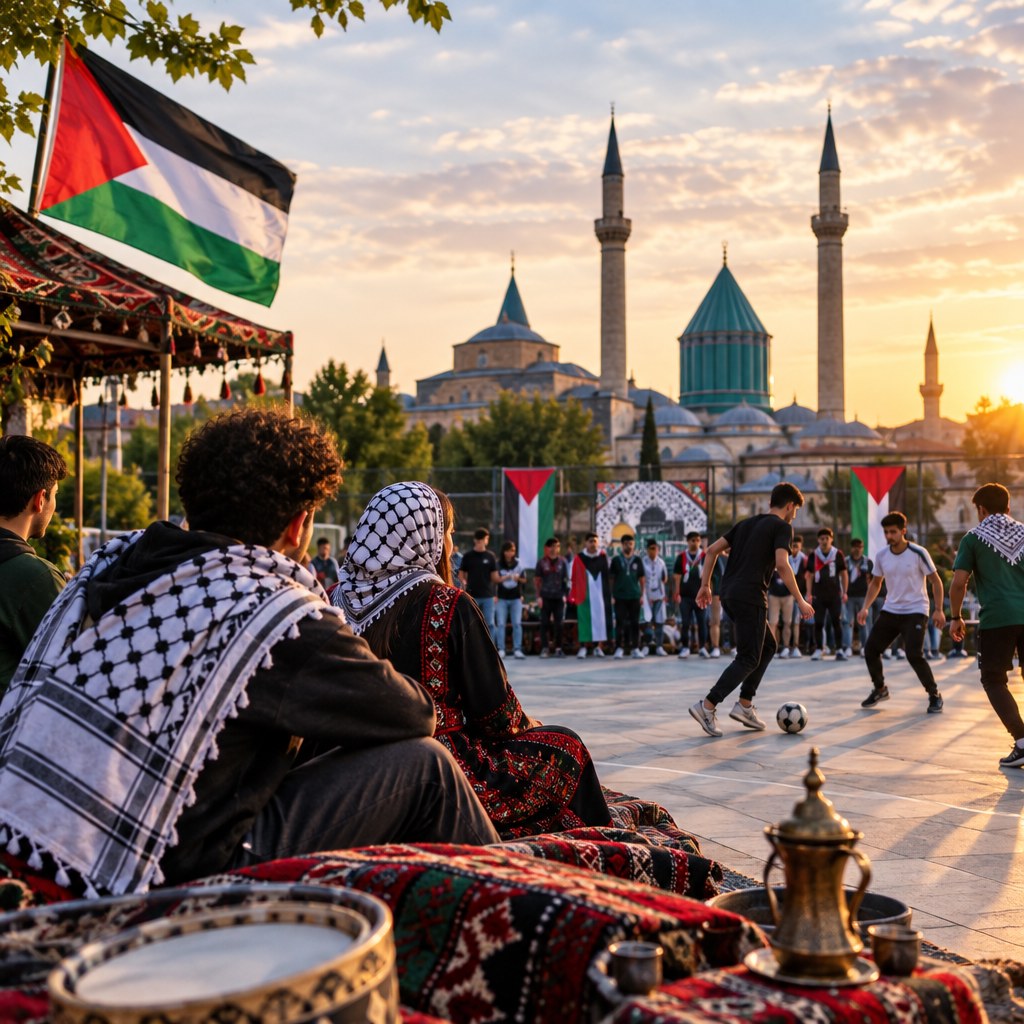
GAZA: Nearly a year after the ceasefire agreement announced in October 2025, Gaza remains trapped in a severe humanitarian crisis, with displacement, damaged infrastructure, food insecurity and unsafe shelter continuing to affect civilians.
A United Nations humanitarian situation report published on October 5 warned that food assistance is expected to shrink because of funding shortfalls and that hundreds of thousands of people face heightened winter risks.
Winter adds a new layer of danger
UN OCHA said about 279,000 people are living in flood-prone displacement sites or unsafe buildings. Assessments identified hundreds of displacement sites at risk of flooding as the rainy season approaches.
Many families have already spent extended periods in temporary shelters, making cold weather and heavy rain a serious humanitarian concern rather than a simple seasonal inconvenience.
Food assistance under pressure
The UN report warned that daily hot-meal production and household food parcel distribution could decline from October because of funding shortages.
Humanitarian organisations have continued providing meals and other assistance, but access restrictions, damaged infrastructure and shortages complicate operations.
Unsafe buildings remain occupied
Large numbers of buildings across Gaza have been damaged by conflict. OCHA reported that thousands require full or partial demolition, yet many remain inhabited because displaced families have few alternatives.
This creates the risk of structural collapse in addition to the continuing effects of conflict.
Casualties since the ceasefire
OCHA, citing Gaza’s Ministry of Health, reported continuing deaths and injuries since the ceasefire agreement. Figures in an active conflict can be revised over time as bodies are recovered and identities confirmed, so casualty numbers should always be attributed to their source and date.
Humanitarian organisations call for access
Islamic Relief Worldwide, marking one year since the ceasefire, said families remain unable to rebuild and that restrictions on materials, machinery and fuel continue to affect living conditions.
The organisation says it and local partners are continuing food and other humanitarian programmes despite operational challenges.
A crisis affecting children and families
Long-term displacement disrupts schooling, healthcare, family income and children’s sense of stability. Winter flooding can also worsen sanitation problems in crowded camps.
Humanitarian reporting increasingly focuses not only on emergency survival but on the absence of conditions for sustainable recovery.
Why this remains an international Islamic story
Gaza continues to be a major concern across Muslim communities worldwide, generating charity campaigns, diplomatic action and public demonstrations. Also read our coverage of the joint position of eight Muslim-majority nations on Gaza and Palestinian statehood. Donors should use verified humanitarian organisations and be cautious of unverified social-media fundraising links.
What to watch
The coming weeks will test humanitarian preparations for winter. Funding, access for aid supplies, shelter materials and progress toward reconstruction will be key indicators of whether civilian conditions improve.
Why a ceasefire does not automatically produce recovery
Stopping or reducing large-scale fighting is only the first stage of recovery. Families need safe homes, functioning water systems, electricity, schools, hospitals and livelihoods. Gaza’s destruction means many of those systems require extensive repair or rebuilding, while unexploded ordnance and unstable structures add further hazards.
The updated satellite imagery published in 2026 has illustrated the scale of physical destruction. Entire neighbourhoods show widespread damage, while tent camps remain visible along parts of the coastline. Images cannot capture every human consequence, but they help explain why return to normal life has been so difficult.
Funding shortages have direct consequences
When humanitarian agencies report funding gaps, the effect is not abstract. It can mean fewer hot meals, smaller food parcels, reduced shelter support or delayed repairs. Aid organisations must also spend money on logistics, staff safety, transport and storage in an environment where infrastructure is badly damaged.
Winter is a public-health problem
Flooding in crowded displacement sites can contaminate living areas, damage tents and increase exposure to cold. Poor drainage and damaged sanitation systems create additional health risks. Children, older people and those with chronic illnesses can be especially vulnerable.
Reconstruction is also political
Rebuilding requires more than money. Construction materials, heavy machinery, border access, security arrangements and political agreements all influence how quickly work can proceed. Debates over Gaza’s future governance also affect long-term planning.
How international donors can respond responsibly
Muslim communities around the world continue to raise funds for Gaza. Donors should verify organisations, use official donation pages and be cautious of emotional appeals that provide no registration details or transparent reporting. Fraud diverts money from genuine humanitarian work and exploits public compassion.
What to watch through the winter
Key indicators include the volume of aid entering Gaza, shelter availability, food-assistance levels, repair of water and health infrastructure and whether displaced families can move into safer accommodation. The anniversary of a ceasefire is therefore not simply a date on a calendar; it is a test of whether reduced fighting has translated into meaningful civilian recovery.
Humanitarian reporting needs sustained attention
Major crises often receive intense coverage during fighting and less attention during the slower work of recovery. Yet families living in damaged buildings, temporary shelters or disrupted communities continue to face daily risks long after a ceasefire headline fades.
Sustained reporting should track schools reopening, hospital capacity, water access, nutrition, shelter and reconstruction rather than focusing only on political negotiations. Those indicators show whether civilian life is actually improving. They also help donors understand where verified humanitarian organisations say needs are most urgent.
Sources: UN OCHA; Islamic Relief Worldwide.
Discover more from ImranJalna
नवीनतम पोस्ट अपने ईमेल पर प्राप्त करने के लिए सदस्यता लें।








Leave a Reply