

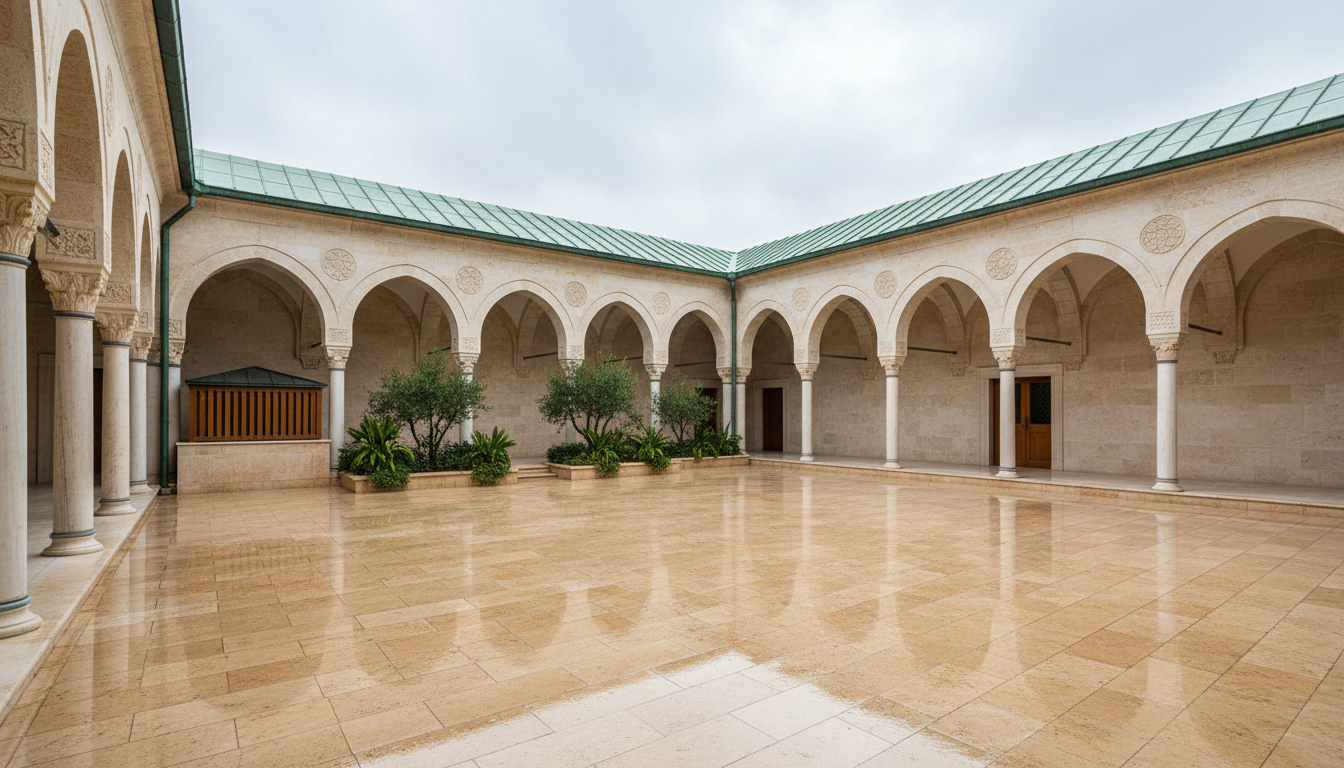
Why Rainwater Harvesting Matters for Mosques
A mosque uses water for ablution, cleaning, drinking and maintaining its grounds. In areas where rainfall is seasonal and water supply is uncertain, responsible conservation can reduce waste and improve resilience. Rainwater harvesting means collecting rain from suitable surfaces and managing it for an appropriate purpose. It is not a guarantee of drinking water, nor a replacement for a safe municipal supply. A mosque considering such a system should start with local rainfall, roof conditions, legal requirements and professional assessment.
The Islamic Principle of Avoiding Waste
Quran 7:31 teaches moderation and warns against excess. This broad principle can encourage thoughtful use of shared resources. Saving water is not simply a financial exercise; it can also help neighbours and future users. However, a religious message should not be used to excuse unsafe engineering. A poorly designed tank can create contamination, structural damage or mosquito breeding. Responsible stewardship requires both good intentions and reliable technical planning.
Begin with a Water Audit
Before purchasing equipment, estimate where the mosque uses water. Record approximate consumption for wudu facilities, washrooms, cleaning and gardens. Note leaks, running taps and seasonal changes in attendance. Review available bills and observe usage at different times. A water audit may reveal that fixing a leaking pipe or installing appropriate tap controls provides more immediate savings than building a collection system. Decisions should follow evidence rather than attractive advertisements.
Understand the Roof Catchment Area
A roof may provide a convenient surface for collecting rainfall, but not every roof is suitable. Material, paint, dust, bird droppings, nearby trees and industrial pollution can affect runoff quality. The roof and gutters must be inspected for condition and safety. Rainwater yield depends on rainfall, usable roof area and collection losses; theoretical calculations often overstate what is actually available. A qualified designer can estimate practical storage and overflow needs for the local climate.
Separate Drinking Water from Other Uses
Collected roof water should not be assumed safe to drink, cook with or use for washing food. Treatment requirements depend on source quality, contamination risks and local standards. For many sites, non-potable uses such as suitable landscape irrigation or certain cleaning activities may be more realistic, subject to professional guidance. Clearly separate any non-potable distribution from drinking-water pipes. Cross-connections can endanger people, so design and installation should be handled by competent professionals.
Why First-Flush and Filtration Matter
The beginning of a rain shower may carry dust and debris accumulated on the roof. A properly designed first-flush arrangement can divert some initial runoff, while screens and filters can reduce leaves and other particles. Neither step alone makes the water potable. The right configuration depends on roof area, local conditions and intended use. Maintenance is essential because blocked filters can cause overflow or standing water. Avoid improvised systems that cannot be safely inspected or cleaned.
Choose a Safe Storage Tank
Storage tanks must be appropriate for the site, structurally supported and protected against contamination. Covers should prevent children or animals from entering and reduce mosquito access. An overflow route should safely direct excess water away from foundations and neighbouring property. Underground and rooftop tanks present different engineering and access risks. Do not install a heavy tank on a roof without a qualified structural assessment. Safe access for cleaning should be considered before installation, not afterward.
Prevent Mosquitoes and Stagnant Water
Poorly maintained water storage can create breeding conditions for mosquitoes. Keep lids secure, screens intact and gutters clear. Inspect for pooled water around downpipes and overflows. Follow local public-health advice on mosquito prevention. Volunteers should not enter confined tanks or use unknown chemicals. If a tank needs internal cleaning, arrange suitable trained service personnel and follow confined-space safety requirements where applicable.
Protect Wudu and Washroom Hygiene
Ablution areas need dependable, hygienic water and drainage. Any proposal to use harvested rainwater there requires careful evaluation of water quality, plumbing separation and applicable regulations. Never connect an untreated tank to existing fixtures simply to save money. Keep washroom cleaning schedules and handwashing facilities in place. A conservation project should improve resource use without increasing infection or injury risks for worshippers.
Plan for Heavy Rain and Overflow
Rainwater harvesting must cope with intense storms as well as ordinary showers. Gutters, pipes and overflow outlets need adequate capacity. Water should not be discharged in a way that floods entrances, damages neighbouring buildings or creates slippery paths. Check local stormwater rules and permissions. Where groundwater recharge is considered, a specialist should assess soil conditions, groundwater protection and any risk to foundations or underground utilities.
Build a Realistic Budget
Compare installation cost, maintenance, cleaning, repairs and expected water savings. Include professional design, safe plumbing, signage and periodic inspection. A cheap system that fails after one season may waste donations. Obtain transparent quotations and document the committee’s decision. If donors contribute to a specific water project, report how their money is used. Do not promise a precise payback period without reliable local figures.
Assign Maintenance Responsibilities
Every system needs an accountable person and a written schedule. Tasks may include inspecting gutters before the rainy season, checking screens, watching for leaks and arranging professional tank servicing. Record dates and findings. If water quality testing is required for an approved use, follow the appropriate testing schedule and standards. A system with no maintenance plan should not be treated as complete, regardless of how impressive it looks at inauguration.
Explain the Project to Worshippers
A short notice can explain why the system was installed, what the collected water may be used for and whom to contact if a leak appears. Clearly label non-potable water points according to local requirements. Avoid displaying unsupported claims such as ‘100% pure rainwater’ or ‘safe for everyone.’ Sharing verified results, such as measured reductions in mains-water consumption, is more credible than promotional slogans. Children can learn about conservation through safe observation without accessing tanks or equipment.
A Step-by-Step Implementation Roadmap
First, complete a water audit and repair obvious leaks. Second, consult local authorities and qualified engineering professionals about feasibility and permits. Third, select intended uses and a design that protects drinking-water systems. Fourth, obtain quotations and committee approval. Fifth, supervise installation and verify safety before operation. Sixth, establish maintenance and recordkeeping. Finally, review actual performance after the rainy season and adjust expectations based on measured results.
Frequently Asked Questions
Can mosque rainwater be used for drinking? Not without appropriate treatment, testing and compliance with local standards. Is a rooftop tank always the best choice? No; structural capacity and safe access must be assessed. Does a filter remove every contaminant? No. Can volunteers clean inside a tank? Confined-space work can be dangerous and should be handled by qualified personnel. Will harvesting eliminate water bills? Usually not; results depend on rainfall, demand, capacity and maintenance. Should every mosque install a system? Feasibility varies by site.
Conclusion and Sources
Rainwater harvesting can support responsible mosque management when it is designed around safety, realistic water needs and regular maintenance. The first priority remains safe water for worshippers and neighbours. Islamic encouragement toward moderation can motivate the effort, while technical standards guide its execution. Read Quran 7:31 and the CDC guidance on collecting rainwater. Related articles: Water Conservation in Islam and Safe Drinking Water in Mosques.
Discover more from ImranJalna
Subscribe to get the latest posts sent to your email.














Leave a Reply