


Why a Mosque Needs a Routine Maintenance Checklist
Mosque buildings are used daily and often welcome large crowds. Small faults such as a loose handrail, leaking tap or blocked drain can become expensive or dangerous if ignored. A routine inspection checklist helps administrators notice problems early, assign responsibility and record repairs. It is not a substitute for inspections required by law or assessments by qualified electricians, engineers and fire-safety professionals. The goal is practical prevention, not paperwork for its own sake.
Care of Shared Spaces as a Trust
Quran 4:58 calls for trusts to be fulfilled, while Quran 7:31 warns against excess. These broad principles encourage responsible care of shared facilities and prudent use of water and resources. Mosque maintenance should protect worshippers, workers and visitors rather than merely improve appearance. The committee should distinguish routine housekeeping from technical work that needs a licensed or otherwise qualified professional.
Start with a Simple Building Map
List the areas that need checking: entrances, prayer hall, washrooms, ablution spaces, stairs, ramps, roof access, electrical rooms and storage. Mark the locations of emergency exits and critical equipment. A large mosque may need separate sheets for each area; a small mosque may use one page. The checklist should reflect the actual building, its age and local hazards rather than copying an unrelated template.
Check Entrances and Walkways
Look for uneven flooring, loose mats, obstacles and damaged handrails. Keep paths and exits free from stored materials. Check that outdoor routes are usable during rain and that lighting is adequate. If a serious hazard is found, restrict access appropriately and arrange competent repair. Volunteers should not attempt structural fixes without the necessary expertise. Record both the problem and the temporary safety measure taken.
Inspect Ablution Areas for Leaks
Wudu areas experience frequent water use, so dripping taps, leaking pipes and pooling water deserve attention. Check visible fittings and drainage without dismantling plumbing unless qualified to do so. Wet floors may create slip risks, especially for older visitors. Arrange safe cleaning and repair promptly. Tracking recurring leaks can help the committee decide whether replacement is more economical than repeated minor repairs.
Keep Washrooms Hygienic
A maintenance checklist should cover working flush systems, handwashing facilities, ventilation, drainage and supplies. Cleaning staff need appropriate protective equipment and safe instructions for any chemicals used. Never mix cleaning products unless their manufacturers explicitly permit it. Record persistent odours, blocked drains or damaged fixtures for proper investigation. Hygiene work should be scheduled according to actual usage, not only the calendar.
Treat Electrical Issues as Specialist Work
Volunteers can report flickering lights, damaged switches, exposed wires or unusual smells, but they should not open panels or attempt repairs without proper qualifications. If a dangerous condition is suspected, follow the site’s emergency procedures and contact a competent professional. Electrical equipment near water deserves particular attention. The checklist should record when faults were reported, who assessed them and when the area was made safe.
Review Fire Safety and Emergency Access
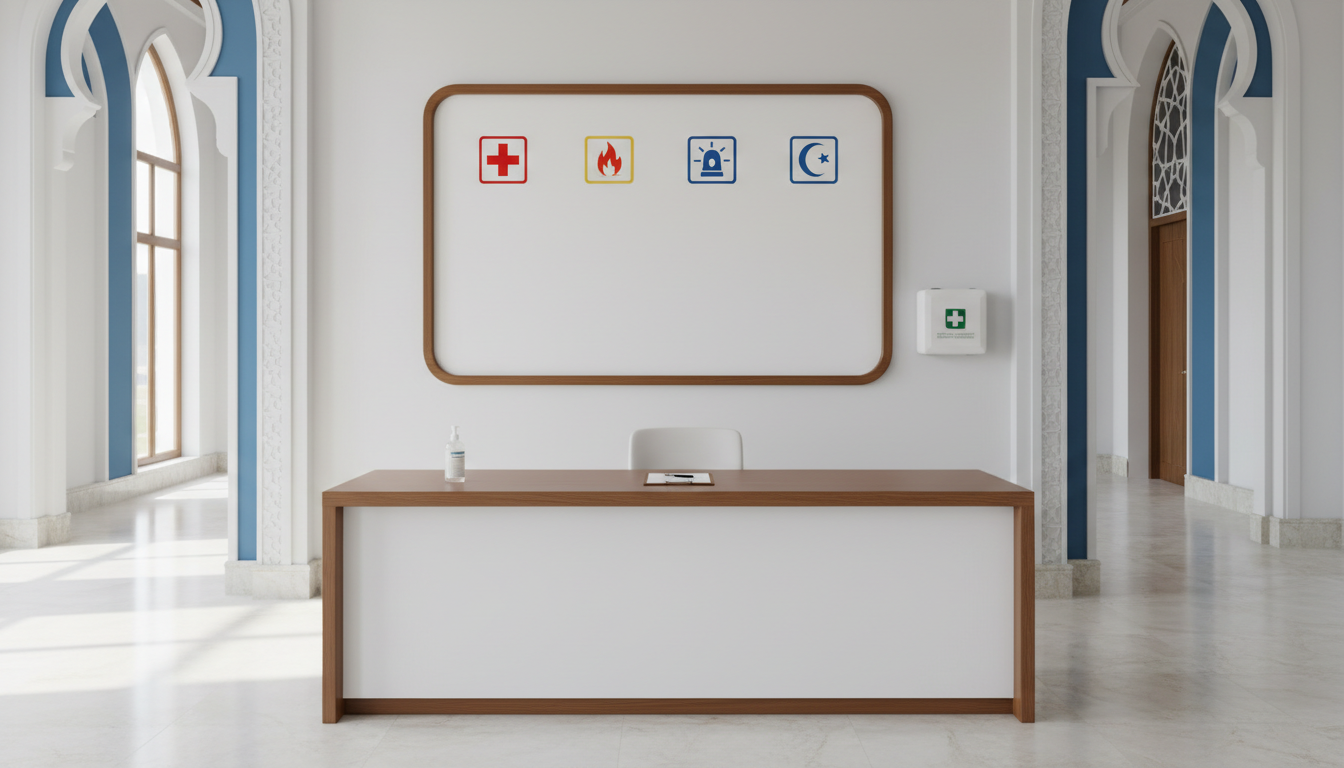
Check that emergency exits remain clear and that safety signs are visible. Fire alarms, extinguishers and emergency lighting may require scheduled professional inspection and testing under local rules. Do not mark specialist equipment as safe merely because it looks intact. The committee should retain service records and follow recommendations from competent authorities. Crowd-management plans must also consider large congregations and special events.
Look After Accessibility Features
Ramps, accessible routes, handrails and designated facilities should remain usable, not become storage areas. Check for loose surfaces, poor lighting and obstructions. Ask worshippers with disabilities about practical barriers without requiring them to disclose private medical details. Any proposed modification should follow applicable building standards and qualified advice. Accessibility is an ongoing responsibility, not a one-time construction project.
Monitor Roofs and Drainage Safely
After heavy rain, look for signs of water ingress, damp patches and blocked ground-level drains. Do not send untrained volunteers onto roofs, ladders or unstable surfaces. Qualified workers should assess elevated work and structural concerns. Keep drainage routes free of rubbish where it is safe to do so. Photographing damage for internal maintenance records may help, provided no private information is unnecessarily captured.
Protect Drinking Water Facilities
Check visible cleanliness, leaks and maintenance records for drinking-water dispensers, tanks and filters. Follow the manufacturer’s service schedule and applicable water-quality guidance. A clear-looking tank does not prove the water is safe. Where water quality is uncertain, seek appropriate testing or professional advice. Avoid making unsupported claims that a particular filter guarantees safe drinking water in every situation.
Use a Priority System for Repairs
Not every defect has the same urgency. Immediate hazards require prompt protective action and professional assistance. Other repairs can be scheduled according to risk, cost and disruption. Record the date reported, responsible person, action taken and completion date. If a repair is delayed, note temporary precautions and a review date. A checklist is useful only when findings lead to decisions.
Keep Volunteers Within Safe Limits
A volunteer may safely report a leaking tap or blocked walkway, but hazardous electrical, structural and high-level work requires qualified personnel. Provide clear reporting instructions and avoid pressuring volunteers to perform tasks beyond their competence. If a task involves children or vulnerable people, apply appropriate safeguarding arrangements. The committee should support workers with reasonable equipment, breaks and supervision.
Set an Inspection Rhythm
High-use areas may need frequent visual checks, while specialist equipment follows its required servicing timetable. Adapt frequency to building conditions, visitor numbers, weather and professional advice. Assign a named person to review completed checklists. Avoid simply ticking boxes from memory. An inspection should take place in the relevant area, with findings recorded honestly, including when something could not be checked.
Review Costs and Long-Term Patterns
A monthly review can reveal recurring problems such as repeated tap leaks or water damage. Compare repair costs, disruption and the likely life of equipment before deciding on replacement. Keep receipts and contractor records securely. Donor funds should be used in accordance with any applicable conditions and transparent financial procedures. The aim is to prevent waste while prioritising safety and reliable facilities.
Practical Checklist and References
A basic inspection sheet can include: location, item checked, observed condition, immediate risk, action required, responsible person and completion date. Never treat a completed form as proof that specialist testing has been done. Islamic references: Quran 4:58 and Quran 7:31. Related guides: Mosque Emergency Contact Directory and Mosque Rainwater Harvesting. Responsible maintenance combines timely observation with qualified repairs.
Discover more from ImranJalna
Subscribe to get the latest posts sent to your email.











Leave a Reply