

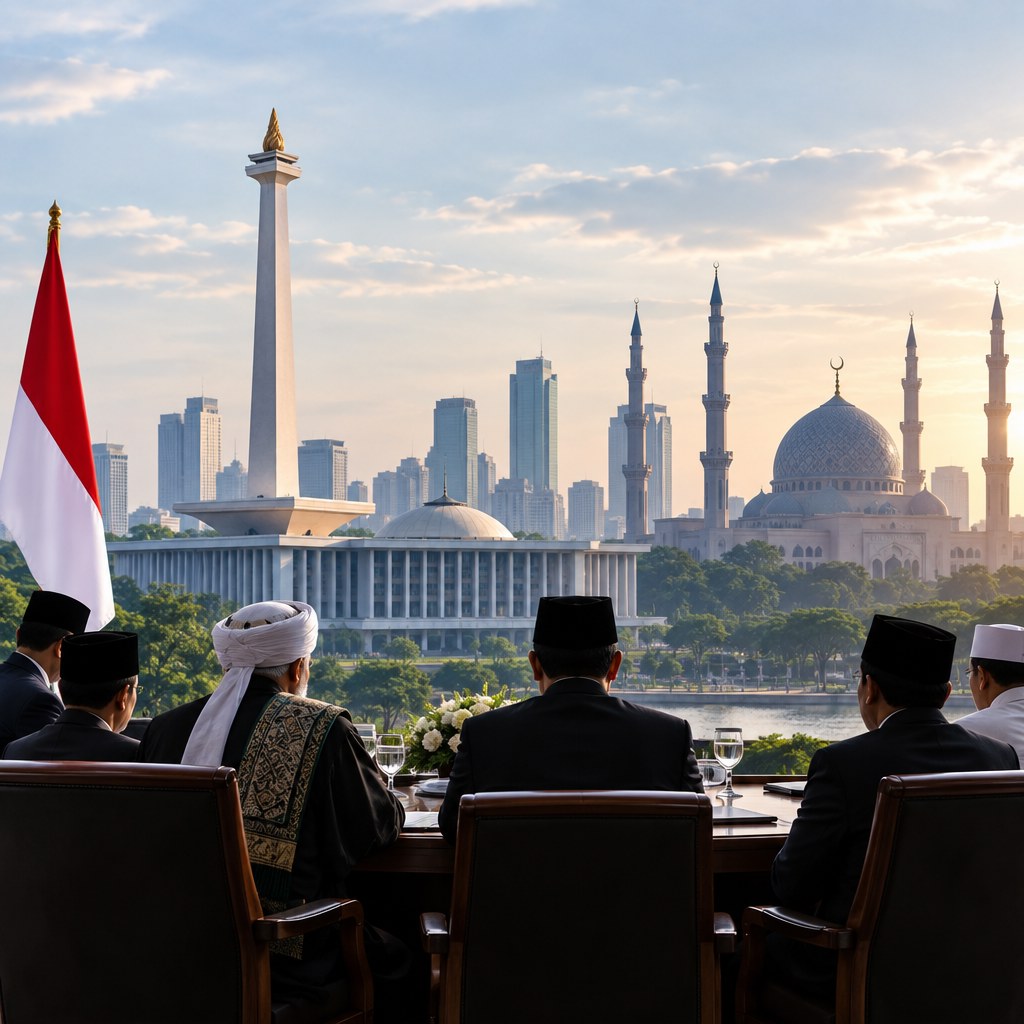
JAKARTA: Indonesian President Prabowo Subianto has appointed prominent Islamic figures alongside business leaders and politicians to the country’s Presidential Advisory Council, a move attracting attention in the world’s largest Muslim-majority nation.
Reuters reported that the new body includes former leaders associated with Nahdlatul Ulama, Indonesia’s largest Islamic organisation, as well as senior political and business figures.
Who has joined the council?
Indonesia’s Cabinet Secretariat said President Prabowo inaugurated 26 members of the Presidential Advisory Council at the State Palace. The official list includes respected Islamic scholar Muhammad Quraish Shihab, former Nahdlatul Ulama chairman Said Aqil Siradj and Anwar Iskandar, alongside former officials, political figures and business leaders.
The diverse composition gives the council access to voices from religion, government, business and civil society.
Why Islamic representation matters in Indonesia
Indonesia has the world’s largest Muslim population, but its political and religious landscape is highly diverse. Major Islamic organisations such as Nahdlatul Ulama and Muhammadiyah have long played important roles in education, social welfare, public debate and national life.
Including senior Islamic figures in an advisory institution can therefore carry influence beyond formal religious policy, particularly on questions involving education, social cohesion and community concerns. Also read our report on Indonesia’s mandatory halal certification for another major development affecting Muslim public life.
A political dimension
Reuters noted that the appointments come amid wider personnel changes in Prabowo’s administration and a decline in his approval ratings. Analysts quoted in reporting have therefore viewed the council not only as a policy body but also through the lens of political coalition-building.
That makes its future performance important. The key test will be whether the council develops a meaningful role in strategic policy rather than functioning mainly as a symbolic collection of prominent names.
Balancing different constituencies
Indonesia’s democracy requires governments to navigate regional, religious, economic and generational interests. A council combining Islamic scholars, entrepreneurs and former officials may provide broad input, but it could also face questions over how competing perspectives are converted into practical recommendations.
What to watch next
Observers will be looking for the policy areas on which the advisory council becomes active. Social welfare, education, economic development, religious harmony and national unity are among areas where prominent Islamic leaders could contribute.
The appointments also underline the continuing public importance of Islamic institutions in Indonesian civic life, even as the country maintains a plural national framework encompassing multiple faith communities.
International significance
Indonesia often presents itself as an example of a large Muslim-majority democracy managing religious diversity. Decisions involving influential Islamic leaders are therefore watched across Southeast Asia and the wider Muslim world.
The council’s composition is deliberately broad
Indonesia’s Cabinet Secretariat says 26 members were inaugurated. Alongside Islamic scholars and former leaders of major Muslim organisations, the council includes people with backgrounds in business, politics and public administration. That breadth suggests Prabowo wants advice crossing sectoral boundaries rather than a body focused only on religious affairs.
Reuters reported the appointments against the backdrop of falling approval ratings and wider personnel changes. That context matters because advisory appointments can serve more than one purpose: bringing expertise into government while also broadening relationships with influential constituencies.
Nahdlatul Ulama’s importance
Nahdlatul Ulama is one of the world’s largest Muslim organisations and has deep networks of pesantren, schools, scholars and social institutions. Former NU leaders therefore bring extensive grassroots connections as well as religious authority. Their inclusion gives the council access to perspectives reaching far beyond Jakarta’s political elite.
Quraish Shihab’s scholarly profile
Muhammad Quraish Shihab is one of Indonesia’s best-known Qur’anic scholars and a former religious affairs minister. His presence adds an intellectual and religious dimension to a council that also contains business and political figures. The significance will depend on whether members receive substantive opportunities to shape policy discussions.
Indonesia’s model of religious pluralism
Although Muslims form the overwhelming majority, Indonesia officially recognises multiple religions and its national ideology, Pancasila, is central to political life. Governments therefore have to balance Muslim-majority concerns with the rights and participation of other communities.
That balancing act is one reason Indonesia is closely watched elsewhere in the Muslim world. It combines competitive elections, powerful Islamic civil-society organisations and a plural national framework on a scale unmatched by most countries.
What the public will judge
The council’s credibility will ultimately depend less on famous names than on visible impact. Indonesians will watch whether it contributes to economic policy, education, social welfare, religious harmony and other practical concerns. If it becomes mainly ceremonial, the political value of the appointments could fade quickly.
Why the appointments matter beyond Jakarta
Indonesia’s decisions are watched closely across Southeast Asia because the country combines demographic weight, a large economy and enormous Muslim civil-society networks. Its scholars and organisations maintain relationships with institutions across the Muslim world.
If the advisory council develops serious policy recommendations, its work could influence debates on education, poverty reduction, religious moderation and economic development. If it remains largely ceremonial, attention will shift back to the political calculations behind the appointments. Either way, the inclusion of major Islamic figures demonstrates that religious organisations remain important actors in Indonesian public life even when they are outside formal party politics.
Sources: Cabinet Secretariat of Indonesia; Reuters reporting.
Discover more from ImranJalna
Subscribe to get the latest posts sent to your email.





Leave a Reply