

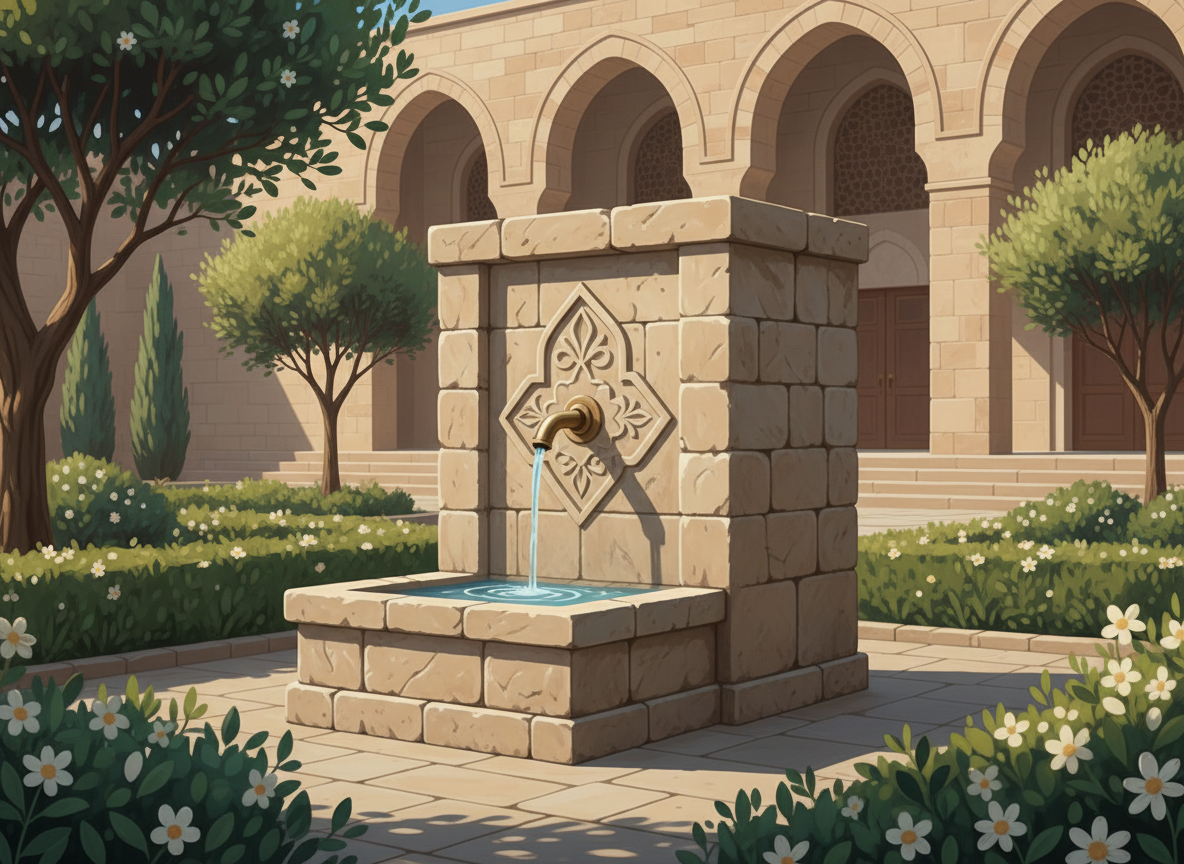
Madinah’s municipality has reported planting 5,444 trees across streets and sites in the central area surrounding the Prophet’s Mosque as part of an urban landscape programme, according to a Saudi Press Agency report dated 7 October 2026.
Reported figures and developments
The report says the programme encompasses approximately 9,930 square metres of greenery and 1,385 planting beds. These figures refer to the wider central area, not necessarily trees planted inside the mosque complex itself.
Background and context
The municipality says irrigation, pruning, cleaning and routine monitoring are part of the maintenance programme. Such work matters because urban landscaping requires ongoing water management and care rather than a single planting ceremony.
Why the story matters
The surroundings of the Prophet’s Mosque serve worshippers, visitors, businesses and residents. Shade and attractive public spaces can improve pedestrian experience, but the report does not establish a measured reduction in local temperatures or quantify environmental benefits.
What remains to be established
The practical questions now are how the municipality maintains the planted areas, manages irrigation and integrates landscaping with pedestrian circulation during periods of high visitor numbers. The municipality’s published figures should not be interpreted as a count of mature trees or an estimate of carbon savings.
Planning greenery in a busy pilgrimage city
The central area of Madinah experiences substantial pedestrian movement as residents and visitors travel to the Prophet’s Mosque. Landscaping in such a setting must account for walking routes, emergency access, street cleaning, visibility and maintenance. Trees may offer shade as they mature, but their usefulness depends on placement, species and the condition of surrounding pavement. Planting beds also need protection from heavy foot traffic. Urban planners therefore have to balance greenery with the needs of worshippers, wheelchair users and service vehicles. The municipal figures describe the scale of the planting programme, not an independently evaluated change in visitor comfort.
Why the reported numbers need context
The reported 5,444 trees, 1,385 planting beds and 9,930 square metres of green area are three different measurements. They should not be combined into a single estimate of environmental benefit. Some trees may be newly planted while others may be at different stages of growth, and a planted bed is not necessarily equivalent to a mature canopy. The report does not identify the species mix, survival rate or precise distribution of plantings. Without those details, it would be misleading to claim a particular reduction in temperature, air pollution or water consumption. The figures are best understood as a municipal description of completed or ongoing landscape activity.
Irrigation and long-term maintenance
In a hot, dry climate, urban greenery requires careful attention to water supply and irrigation methods. The municipality’s account refers to ongoing irrigation, pruning, cleaning and monitoring. Those routine tasks are essential because trees may struggle without adequate care, particularly during establishment. The amount of water used cannot be calculated from the number of trees alone; it depends on species, soil, weather, irrigation design and plant maturity. Any claim that the project saves water or uses recycled water would require specific documentation. Long-term performance should be judged by healthy plant survival, appropriate maintenance and transparent resource management.
Benefits for residents and visitors
Green spaces can make streets more inviting and provide places for people to pause during their journeys. Around a major religious destination, however, convenience and safety matter as much as appearance. Visitors may be unfamiliar with the area, and some may have limited mobility or be travelling in family groups. Clear routes, accessible crossings and adequate resting areas can help them navigate. Landscaping should complement these facilities rather than obstruct them. The report offers a useful starting point for discussing public-space quality, but it does not provide survey data showing how residents or pilgrims assess the changes.
Questions about sustainability
Sustainability claims are strongest when accompanied by measurable information. For this project, relevant indicators could include tree survival rates after one or two years, irrigation efficiency, shade coverage, maintenance costs and accessibility assessments. Public reporting could also explain whether landscaping is integrated with broader transport and pedestrian plans. Such information would help readers understand whether the programme produces durable benefits. It is important not to confuse the aesthetic appeal of photographs with proof of environmental performance. An attractive planting project can still face difficult questions about water use and upkeep.
What to watch next
Further municipal updates may provide more precise maps, planting schedules or maintenance outcomes. Visitors can also observe whether green areas are kept clean, accessible and well maintained, while recognising that individual impressions are not a substitute for systematic assessment. The central fact remains that Madinah authorities have reported a substantial landscaping initiative near the Prophet’s Mosque. The next stage of responsible coverage is to establish how the plantings develop and how they affect the experience of people using the surrounding streets.
Sources and further reading: Primary reporting or official record. Read more on Islamic topics and international news.
Discover more from ImranJalna
नवीनतम पोस्ट अपने ईमेल पर प्राप्त करने के लिए सदस्यता लें।












Leave a Reply