

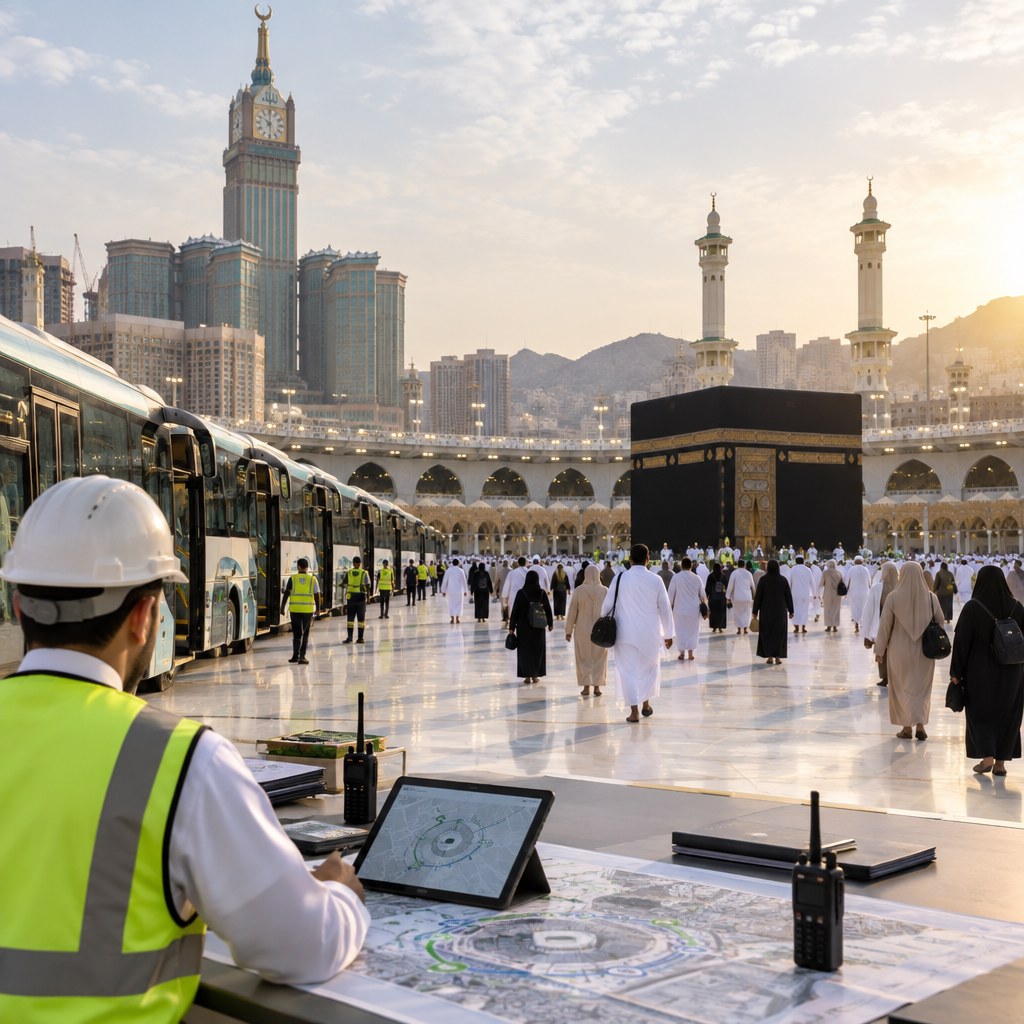
Jeddah conference puts the next Hajj season in focus
Preparations for Hajj 2027 are already attracting attention, with the sixth Hajj Conference and Exhibition scheduled to take place in Jeddah from 8 to 11 November 2026. According to an Arab News report published on 10 October, more than 520 local and international organisations are expected to participate. The gathering is intended to bring together organisations involved in pilgrimage services, operational planning, technology and sustainability. The conference is a planning event, not an announcement that registration has opened for every country. Pilgrims should distinguish discussions about next year’s services from the official decisions that determine who can travel, what they will pay and which providers they may use.
Why Hajj requires international coordination
Hajj is an annual Islamic pilgrimage to Makkah and one of the five pillars of Islam for Muslims who are physically and financially able to perform it. Unlike an ordinary holiday, the pilgrimage takes place during a defined period and brings large numbers of people into a relatively concentrated area. The journey requires cooperation among Saudi agencies, national Hajj missions, airlines, accommodation providers, ground transport operators, caterers and health services. A delay in one part of that system can affect several others. A flight arriving late may disrupt transfers; an accommodation change may alter transport routes; a medical requirement announced late may complicate departure. Early coordination therefore matters even before individual travellers know whether they have been allocated a place.
What the conference may discuss
The reported agenda points to service quality, operational readiness, innovation and sustainability. These broad themes can include how pilgrims receive information, how different service providers coordinate and how facilities cope with demand. Digital systems may help organise travel records and service requests, but technology is useful only when it works reliably and is accessible to people with different language and technical needs. Sustainability is another important consideration because large events involve transport, energy use, water consumption and waste management. Conference presentations can introduce proposals and partnerships; they do not by themselves prove that a particular system will be adopted or that every problem has been solved.
What pilgrims should verify before paying
The most important practical step is to follow the official Hajj authority in the pilgrim’s own country. Registration rules, allocation methods, payment schedules and authorised package providers vary by jurisdiction. Travellers should not rely solely on social media posts, unsolicited messages or an agent’s verbal promise. Before transferring money, they should verify the operator’s credentials through the appropriate government channel, read the full contract and understand the refund and cancellation conditions. They should also confirm whether accommodation, transport, meals and other services are included in the quoted price. A promotional advertisement is not a substitute for official authorisation, and an attractive early offer does not establish that a Hajj place has been secured.
Health, documentation and travel planning
Pilgrims should allow time for passport checks, vaccination and other health requirements, travel documentation and medical advice where appropriate. Exact requirements can change, so guidance from official authorities should take precedence over old checklists. People with chronic medical needs should discuss the physical demands of travel with a qualified healthcare professional and ensure they understand how to carry necessary medication lawfully. Families should keep copies of key documents and know whom to contact if travel arrangements change. These preparations do not guarantee a place, but they reduce avoidable difficulties once an application is approved. Travellers should avoid making non-refundable independent bookings until the relevant official arrangements are confirmed.
Questions that still need answers
Several major details remain outside the scope of the conference announcement. It does not establish the final quota for any particular country, confirm a universal registration deadline or set the price of every Hajj package. Nor does the number of participating organisations indicate how many pilgrims will be accommodated. Those details require separate official announcements. Readers should be cautious about articles that turn a planning milestone into a claim that applications have opened. It is equally important to distinguish a proposed service improvement from an implemented change. Where a ministry or operator publishes a new rule, its date, geographic scope and affected group should be made clear.
Why early planning matters to Muslim communities worldwide
For Muslim communities in Asia, Africa, Europe, the Americas and elsewhere, Hajj preparation involves more than buying a ticket. Many pilgrims save for years, coordinate family responsibilities and seek guidance from religious and travel authorities. Accurate information is especially valuable because rumours about quotas or package prices can create anxiety and opportunities for fraud. Community organisations can help by sharing official notices, explaining unfamiliar procedures and reminding prospective pilgrims to verify documents. News coverage also has a responsibility to avoid exaggerated headlines. A conference attended by hundreds of organisations is significant as a coordination exercise, but its success will ultimately be measured by the quality and reliability of services delivered to pilgrims.
What happens next
Attention will turn to the November conference and any formal announcements that follow. The most useful updates will identify specific decisions, responsible authorities, implementation dates and the pilgrims affected. Until then, the sensible course is to monitor official Saudi Ministry of Hajj and Umrah communications alongside notices from each country’s designated Hajj body. ImranJalna will distinguish verified developments from preliminary discussions as the 2027 pilgrimage season approaches.
Sources: Arab News conference report; Saudi Ministry of Hajj and Umrah. Explore Islamic coverage and international news.
Discover more from ImranJalna
नवीनतम पोस्ट अपने ईमेल पर प्राप्त करने के लिए सदस्यता लें।












Leave a Reply