

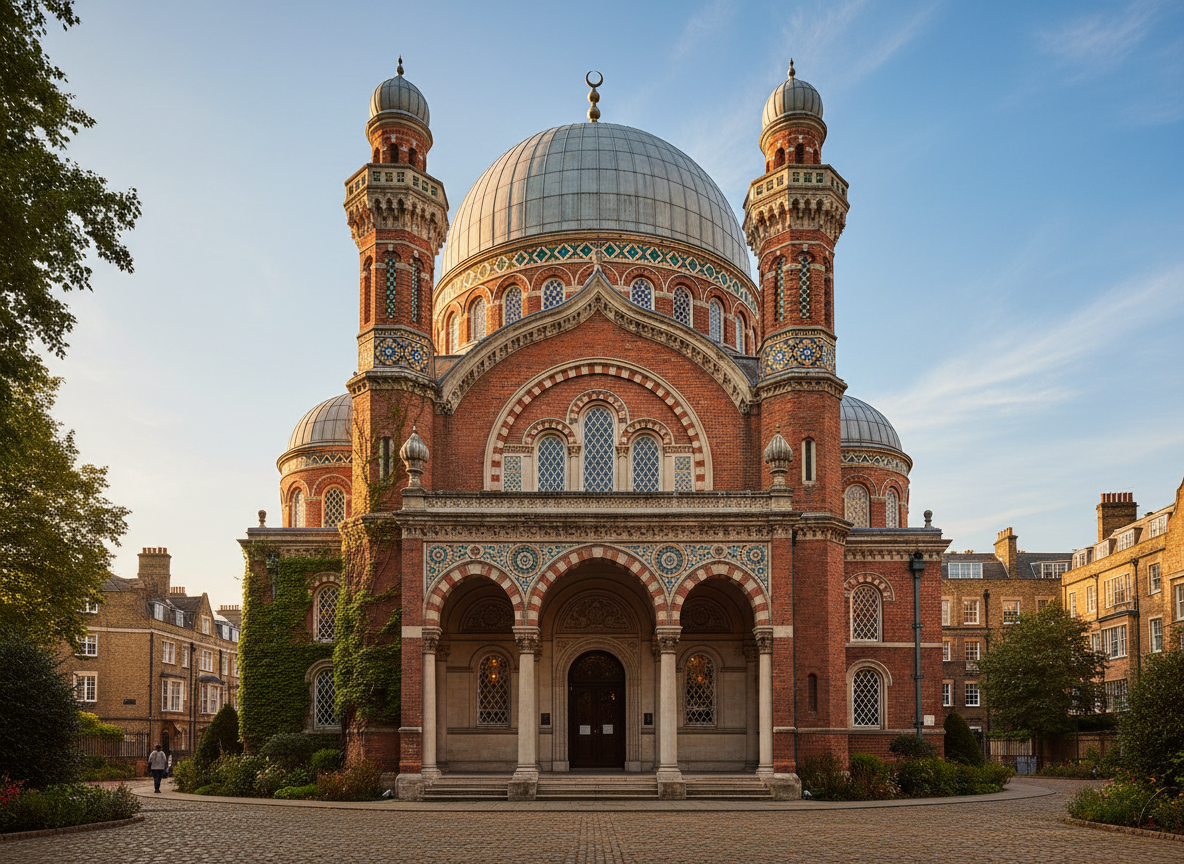
London’s Fazl Mosque marked its centenary on 3 October 2026, one hundred years after the building opened in Southfields. It is recognised by Historic England as the first purpose-built mosque in London and the second in Britain.
Reported figures and developments
The Grade II-listed building at 16 Gressenhall Road was designed by TH Mawson and Sons. Historic England describes its combination of mosque design traditions with restrained British classicism. The foundation stone was laid in 1924 and the mosque opened on 3 October 1926.
Background and context
The mosque was established by the Ahmadiyya Muslim Community, with substantial funding raised in India, including donations by women. It is important to identify this affiliation accurately: Ahmadiyya beliefs are contested by many other Muslim denominations, and the institution does not speak for all British Muslims.
Why the story matters
Centenary organisers reported a reception on 3 October attended by civic and faith representatives, alongside a permanent historical exhibition and events in other UK regions. Those attendance and programme details come from the organisers’ own account.
What remains to be established
The building’s history illustrates how a religious institution can become part of the wider architectural and social record of a city. For readers interested in British Muslim history, the heritage listing and archival material provide a basis for further research beyond the anniversary celebrations.
A milestone in Britain’s religious architecture
The Fazl Mosque’s hundredth anniversary provides an opportunity to examine a building that forms part of London’s architectural record. Historic England lists the mosque at Grade II, recognising its special historic and architectural interest. Heritage listing does not imply that every aspect of the institution’s theology is endorsed by the state. Rather, it reflects the significance of the building as part of the country’s built environment. The mosque’s survival over a century offers researchers evidence of how religious communities established permanent spaces in twentieth-century Britain.
How the mosque was established
The building was developed by the Ahmadiyya Muslim Community and opened in 1926. Its construction was supported by fundraising linked to the community in India, including donations from women. That transnational connection is an important part of the mosque’s story: a religious project in London drew support from people thousands of miles away. The history also illustrates how communities organised funding, acquired property and commissioned architecture at a time when purpose-built mosques were uncommon in the capital. Accounts of the project should identify the Ahmadiyya affiliation clearly rather than present it as representative of every Muslim tradition.
Design and heritage significance
Historic England’s listing describes a building that combines mosque architectural elements with aspects of British classical design. Such a combination can be understood within the practical and aesthetic choices of its period. Architecture provides evidence about how a community sought visibility and permanence, but design alone cannot explain the full religious or social history of the institution. Researchers can compare the listed building with photographs, planning records and contemporary accounts to understand how it has changed. The formal listing is a more reliable basis for architectural facts than unsourced claims circulated during anniversary celebrations.
Religious diversity and accurate reporting
The Ahmadiyya Muslim Community identifies as Muslim, while many Sunni and Shia scholars and institutions reject important Ahmadiyya theological claims. These disagreements have sometimes carried serious social and political consequences in different countries. Reporting on the centenary should neither erase the community’s self-description nor imply that it represents all British Muslims. The architectural milestone can be covered accurately without resolving theological disputes. Readers benefit when journalists distinguish a specific denomination, a heritage designation and the broader history of Muslim life in Britain.
Why centenary exhibitions matter
An exhibition or archive associated with an anniversary can bring historical documents to public attention. Photographs, letters, plans and accounts from earlier generations may reveal details that are otherwise difficult to reconstruct. Organisers have described a permanent exhibition and anniversary events, but the scope and contents should be checked against materials made available to visitors. Exhibitions can also reflect the priorities of the institution presenting them, so independent archival research remains useful. Heritage interpretation is strongest when original sources are identified and visitors can distinguish documented facts from commemorative narratives.
The next chapter of the building’s history
The mosque’s centenary is not only a look back. Listed buildings require ongoing conservation, and institutions must balance their historic fabric with contemporary accessibility, safety and community needs. Any future renovation should be assessed against published plans and heritage requirements rather than speculation. For Londoners and visitors, the site is a reminder that Britain’s religious landscape has a longer and more varied history than is sometimes assumed. Its story belongs in a broader account of migration, architecture, community organisation and the changing city.
Sources and further reading: Primary reporting or official record. Read more on Islamic topics and international news.
Discover more from ImranJalna
नवीनतम पोस्ट अपने ईमेल पर प्राप्त करने के लिए सदस्यता लें।





Leave a Reply