

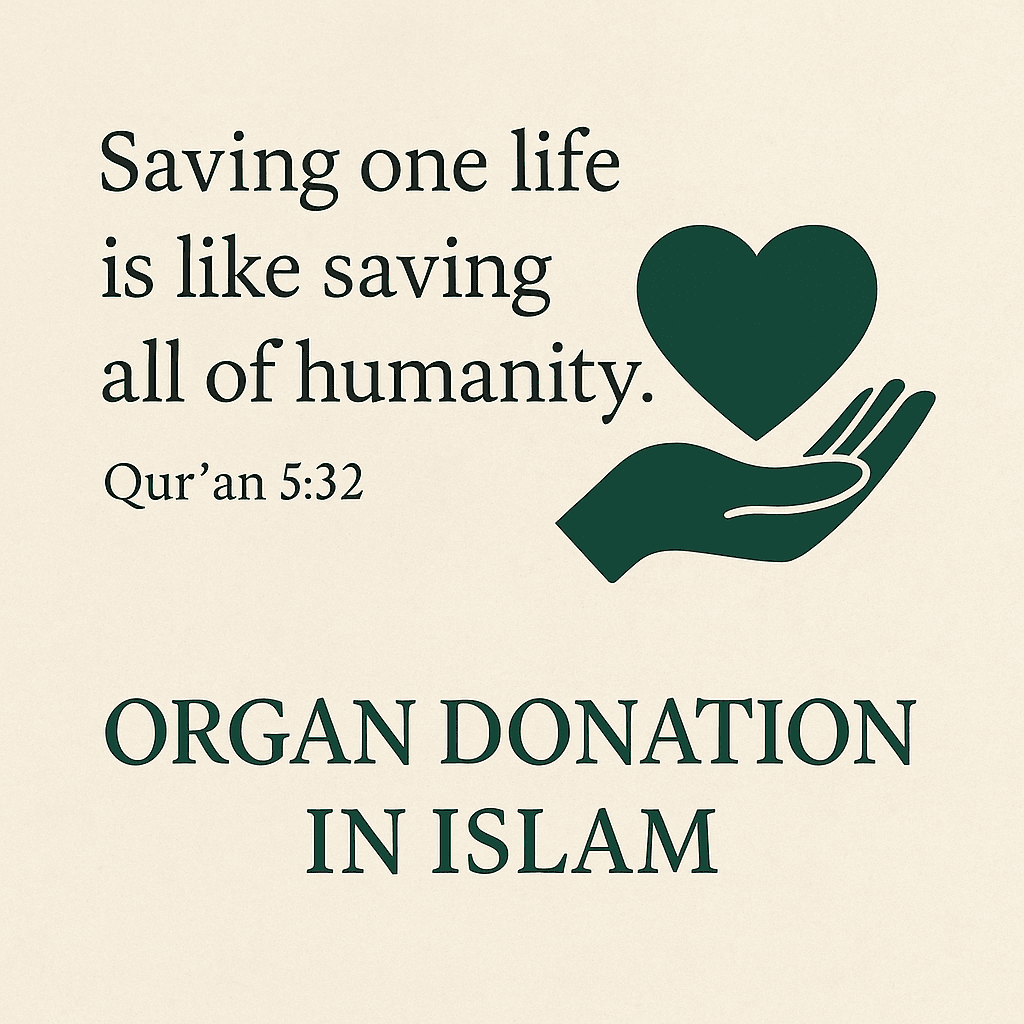
Organ Removal and Donation in Islam: Principles, Fatwas, and Ethical Considerations
Organ transplantation is one of the most remarkable achievements of modern medicine. It offers hope to patients suffering from organ failure and can dramatically improve the quality of life for thousands of people worldwide. Yet, for Muslims, such life-saving procedures must be carefully examined through the lens of Shariah (Islamic law).
This article explores the Islamic perspective on organ removal and donation, including scriptural foundations, conditions of permissibility, major fatwas, ethical debates, and practical advice for Muslims.
Sacredness of the Human Body
In Islam, the human body is considered a trust from Allah (amānah). A person is not the ultimate owner of their body but a custodian who must care for it according to divine guidance. The Qur’an states:
“Indeed, We have honored the children of Adam…” (Qur’an 17:70)
Because of this inherent dignity, the body must be respected both in life and after death. Any form of mutilation or desecration is forbidden unless there is a clear necessity (ḍarūrah) to preserve life.
The Principle of Saving Life
One of the fundamental objectives of Shariah (maqāṣid al-sharī‘ah) is the preservation of life (ḥifẓ al-nafs). The Qur’an emphasizes:
“And whoever saves one life – it is as if he had saved all of mankind.” (Qur’an 5:32)
This verse is often cited by scholars to justify organ donation when it saves or prolongs life. Therefore, many jurists consider organ transplantation a form of charity (ṣadaqah) and even ṣadaqah jāriyah (continuous charity) if done after death.
Key Conditions for Organ Donation in Islam
- Voluntary Consent: For living donors, organ donation must be voluntary. For deceased donors, a donor card, written will, or family consent is required.
- No Commercialization: Selling or buying organs is strictly prohibited.
- No Unjust Harm: Living donors must not suffer permanent harm or risk to their life.
- Respect for the Body: Organ removal must be done respectfully.
- Purpose of Saving Life: Transplants should only be performed for genuine medical necessity.
- Prohibited Organs: Reproductive organs and parts that affect lineage are generally excluded.
The Debate on Brain Death
A key controversy among Muslim scholars is whether brain-stem death constitutes legal death.
- Accepted by some: The Islamic Fiqh Academy and others permit organ retrieval after brain-stem death.
- Rejected by others: Some scholars argue that life continues as long as the heart beats, even with machines.
Major Fatwas on Organ Donation
- Al-Azhar (Egypt): Permits organ donation with conditions.
- Dar al-Ifta al-Misriyyah: Considers it a charitable act.
- Islamic Fiqh Council (OIC): Allows donation but bans trade.
- Fiqh Council of North America (FCNA): Encourages registration as donors.
- Muslim Council of Britain (MCB): Promotes awareness with the NHS.
Ethical Concerns in Organ Removal
- Exploitation of the poor through organ trafficking.
- Commercialization of human body parts.
- Family opposition due to cultural sensitivity.
- Misuse in non-life-saving medical experiments.
Organ Donation as Sadaqah Jariyah
Many scholars highlight that donating an organ can be an ongoing charity. Just as building a well benefits people after one’s death, saving a life continues to bring reward.
Practical Guidance for Muslims
- Learn local fatwas and laws before registering.
- Register as a donor with proper authorities.
- Discuss your intentions with your family.
- Avoid any commercial organ trade.
- Consult medical experts about risks.
Conclusion
Islam teaches both respect for the human body and the duty to preserve life. Within this balance, most scholars agree that organ removal and donation—when carried out ethically—are not only permissible but also praiseworthy. It can be seen as a lasting act of compassion and a form of ṣadaqah jāriyah for the donor.

Discover more from ImranJalna
नवीनतम पोस्ट अपने ईमेल पर प्राप्त करने के लिए सदस्यता लें।






Leave a Reply